
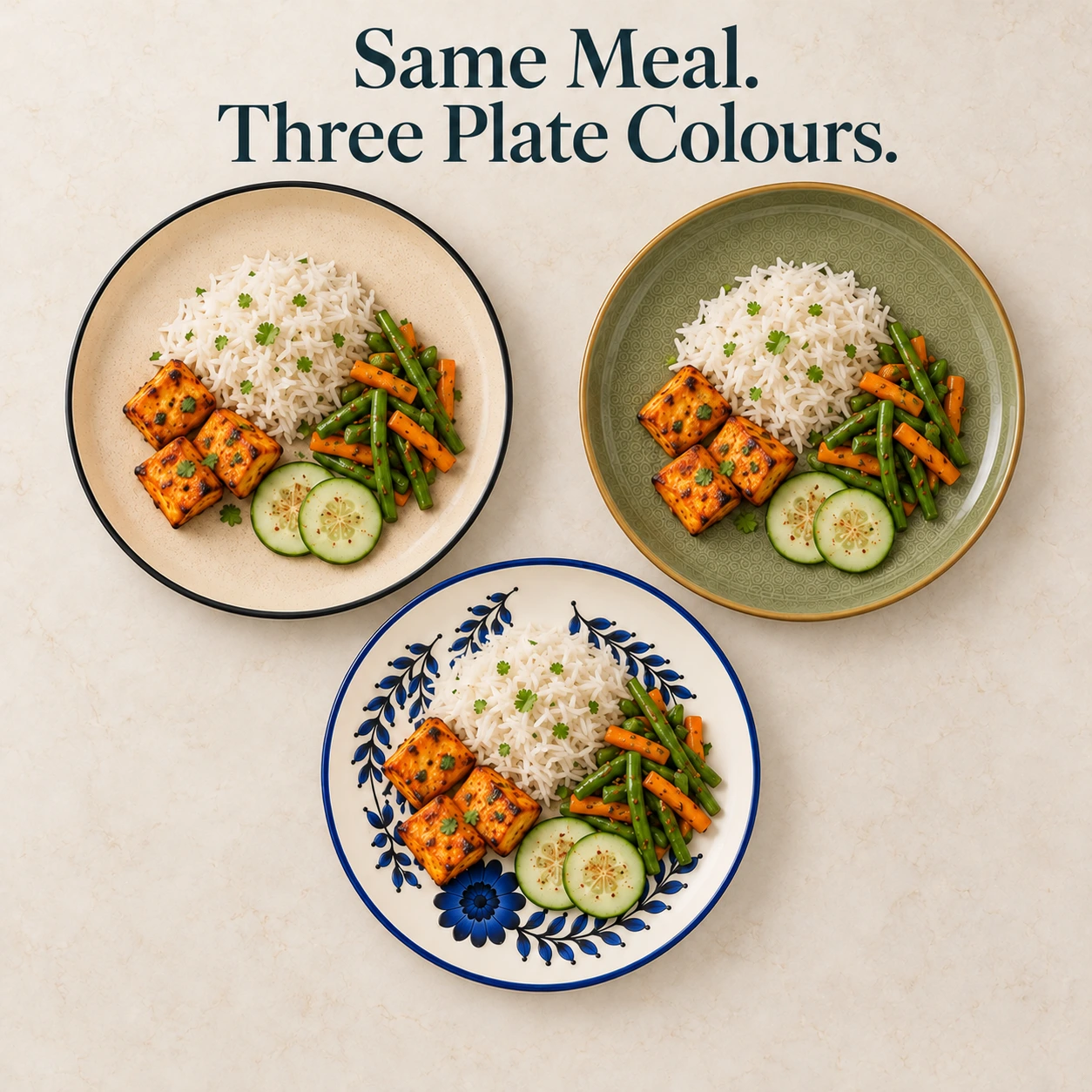
Which Colour Dinner Plates Make Indian Food Look Its Best?
A plate of fragrant pulao, golden paneer tikka or a colourful vegetable preparation already brings plenty of character to the table. The dinnerware underneath it can either provide a quiet background or become part of the presentation.
That does not mean you need restaurant-style plating skills—or an entirely new dinner set—to make a meal look inviting. Often, it starts with choosing between the dinner plate colours you already own.
The best plate colour for food presentation depends on the food, the visible pattern and the lighting. Neutral dinner plates are a versatile starting point, while green and floral designs offer different ways to frame a meal. There is no single colour that makes every dish look better.
Whether you are preparing a Diwali dinner or serving an ordinary weekday lunch, this guide explains how to choose coloured dinner plates that suit your food and your home.
Start With the Food, Not Just the Table Décor
When shopping for dinnerware, it is easy to picture the plates beside a table runner or matching glasses. But once dinner is served, the food becomes a large part of the colour scheme.
A useful approach to food presentation on plates is to ask three questions:
- What is the main colour of the meal?
- Do you want the plate to contrast with the food or create a softer, coordinated look?
- How much of the plate will remain visible after serving?
Think about a typical meal in your home. White rice, yellow dal, green vegetables and a tomato-based curry create a very different composition from a single serving of noodles or a few pieces of paneer tikka.
The right choice is not necessarily the most striking plate when empty. It is the plate you enjoy looking at once your usual meal is on it.
A Quick Guide to Dinner Plate Colours
Use these combinations as starting points to try, rather than rules that every meal must follow.
| Plate style | A useful combination to try | What to look for |
|---|---|---|
| Beige or another light neutral | Colourful vegetables, rice dishes and mixed meals | Whether the food remains clearly defined against the background |
| Olive green | Pale rice, paneer and warm-coloured roasted foods | Whether the food and glaze provide the contrast you prefer |
| Floral blue | Simply arranged foods with some plate surface exposed | Whether the pattern complements the food without making the arrangement feel crowded |
| A contrasting dark rim | A meal arranged within the inner eating surface | Whether the border provides a pleasing frame without restricting usable space |
Choosing dinner plate colours becomes easier when you compare them against your actual meals rather than judging them only from an empty-table photograph.
1. Neutral Dinner Plates: A Flexible Starting Point
Neutral dinner plates are worth considering if your menu changes frequently and you prefer the food to provide most of the colour.
Beige, ivory and similar shades can give a mixed meal a relatively quiet background. You can use the same plate for a colourful lunch, an evening snack or a more restrained festive serving without changing the entire table arrangement.
Try them with a colourful everyday meal
Arrange a portion of rice, a dry vegetable dish and a few slices of cucumber or carrot on the plate. Keep a little space between components so their colours and textures remain distinguishable.
If the meal includes dal or a loose curry, a separate bowl can keep it contained. Choose that bowl for its practical size and shape first; matching it perfectly is optional.
Let a contrasting rim remain visible
A dark rim can act as a visual border around the food. You do not need to leave a large empty area, but keeping the rim reasonably clear lets the plate’s design remain part of the setting.
The nestcase Beige Dinner Plates with Black Rims—Set of 6 offer a neutral-and-dark-rim combination to consider.
Choose this style because you like how it works with your food—not because neutral crockery is a compulsory starting point for an elegant table.
2. Green Dinner Plates: Try a Different Background
Green dinner plates introduce more colour beneath the meal. Depending on the shade, glaze and lighting, they can create either a noticeable contrast or a closer colour relationship with the food.
An olive-green plate is therefore worth comparing with pale or warm-coloured ingredients you regularly serve.
Compare pale foods against the glaze
Try a small serving of rice or a paneer dish on a green plate and a neutral plate. Look at the outline of the food and decide which presentation you prefer.
The aim is not to prove that one colour is better. It is to find out whether you enjoy a stronger distinction between the food and its background.
Be thoughtful with green-on-green combinations
A green vegetable preparation on a green plate may create a coordinated look, but the food and plate can also appear less distinct.
If you want more separation, use other components already belonging to the meal—such as rice or roti—to break up the colours. There is no need to add a garnish solely for a photograph.
For a coordinated option, explore the nestcase Olive-Green 14-Piece Stoneware Dinner Set. It brings plates and bowls into one collection.
Green dinner plates can work beyond festive occasions, too. Before choosing a complete set, consider whether you will enjoy the colour with your everyday lunches and dinners.
3. Patterned Dinner Plates: Make Room for the Design
Patterned dinner plates can add interest without requiring many decorative accessories. The key is to consider both the food and the part of the pattern that will remain visible.
You do not have to serve only plain food on a patterned surface. However, a complicated food arrangement combined with a busy design may look more detailed than you intended.
Use a simple arrangement
Try placing the main food in one area rather than spreading small elements across the entire plate.
For example, arrange a few pieces of paneer tikka together, or serve a portion of pulao with its accompaniment alongside. Let the meal have a clear centre of attention.
This is a practical way to approach food presentation on plates without turning dinner into a styling project.
Decide how much pattern you want to show
Some people prefer a small amount of artwork around the food. Others like a fuller plate where the pattern appears mainly at the edges.
Both approaches are valid. Do not reduce a comfortable meal portion merely to reveal more decoration.
The nestcase Floral-Blue Dinner Plates—Set of 6 provide a patterned alternative to a neutral or green setting.
Patterned dinner plates are especially useful to consider when you want the crockery itself to contribute to the table’s appearance, with fewer additional accessories.
How to Choose Plates for Indian Food
Choosing plates for Indian food involves more than finding an attractive colour. A meal with rice, roti, dry vegetables and separate accompaniments needs enough usable space to remain comfortable to eat.
Roti, sabzi and dal
Leave room for the roti and dry preparation without pushing everything to the edge. If dal is served separately, use a suitable bowl and check whether placing it on the plate leaves enough eating space.
The bowl can also sit beside the plate when that makes the setting more comfortable.
Rice dishes and accompaniments
For pulao or another rice-based meal, consider how the rice looks against the plate and where the accompaniment will sit.
Avoid piling food high simply to keep the outer plate surface empty. Presentation should support the meal, not make it harder to eat.
Snacks and smaller servings
For a snack serving, the amount of visible plate increases. That makes the colour, rim and pattern more noticeable.
Use a plate size that suits the serving. An oversized dinner plate is not automatically the best choice for a small snack.
The most useful plates for Indian food balance appearance with usable space, comfortable serving and the way your household actually eats.
Try the Same Meal on Two Different Plates
You do not need to rely entirely on product photographs. A simple comparison at home can help you decide what you prefer.
- Choose a meal you make regularly.
- Place similar portions on two different plates.
- Arrange the food in roughly the same way.
- Put both plates under the same light.
- Compare them from the position where you normally sit.
- If you take photographs, use the same angle and avoid filters.
Look for specific differences. Is the rice clearly visible? Does the pattern feel pleasantly decorative or too prominent? Does one plate make the serving look more crowded?
This is a personal comparison, not a scientific test. It helps you choose based on your food and preferences rather than a universal “best colour” claim.
Check Your Plates in Daylight and Evening Light
A plate that looks appealing near a window may look different under warm indoor lighting.
Before committing to a colour scheme for a festive dinner, place the crockery under the lighting you will actually use. Compare the plate, food and nearby textiles together.
Keep photographs colour-accurate
If you photograph your table, avoid heavy filters that change the glaze or make the food unnaturally bright. A photograph should help you see the combination—not create a version that does not exist in person.
Keep the surroundings simple
If you are comparing two plates, use the same background. Changing the napkin, table surface and lighting at the same time makes it harder to judge the plate itself.
Once you have chosen the crockery, you can add the rest of your table setting around it.
Create a Diwali Meal Setting Without Buying Everything Again
Festive dining does not require replacing every plate, bowl and glass you own.
Start with your planned menu and the crockery already available. Then identify anything genuinely missing: enough dinner plates, a practical serving bowl or a coordinated set you expect to use throughout the year.
If your plates are patterned, try keeping the surrounding textiles understated. If the plates are neutral, you can introduce colour through napkins or the food itself. Neither approach needs to become a strict decorating rule.
Keep the centre of the table usable, with enough room for serving dishes and comfortable movement. Decorative items should not obstruct reaching, passing or serving.
You can explore nestcase Dinner Sets for coordinated options, or browse Bowls & Platters when an additional serving piece would be more useful than a complete new set.
Before Buying, Check More Than the Colour
A beautiful finish is only one part of choosing dinnerware.
Before placing an order, check:
Do not assume that every item in a brand’s range has identical care requirements. Equally, do not choose a larger set solely because its piece count sounds impressive.
The best purchase is something that suits both your meals and your routine.
Frequently Asked Questions
What is the best plate colour for food presentation?
The best plate colour for food presentation depends on the food’s colour, the plate’s pattern and the lighting. A neutral plate is a flexible starting point, while a coloured or patterned plate can create a different effect. Compare the same meal on two plates to see which you prefer.
Are neutral plates better than coloured dinner plates?
Not necessarily. Neutral plates provide a quieter background, while coloured dinner plates make the dinnerware a more noticeable part of the presentation. Choose according to the food you serve and the appearance you enjoy.
Which plate colour works with white rice?
Try white rice on a neutral plate and a deeper-coloured plate under the same light. A deeper background may make its outline more distinct, while a light background can create a softer look. There is no single correct choice.
Can floral plates be used for everyday Indian meals?
Yes, provided their size and shape suit the meal. Leave some pattern visible if you enjoy seeing the design, but do not compromise eating space or suitable portion sizes for styling.
Should dinner plates match the serving bowls?
Matching is optional. A coordinated collection can make selection straightforward, but existing bowls can also work well. Prioritise suitable capacity, easy serving and enough table space.
Does plate colour affect how food tastes?
This guide uses colour as a presentation choice, not as a promise about taste or appetite. Choose a plate because you enjoy its appearance and find it practical.
Do I need different plates for everyday meals and Diwali?
No. Dinnerware that suits your regular meals can also be used for festive dining. Adjust the surrounding table setting if you want a different mood, rather than assuming a separate set is necessary.
Choose the Plate That Works With Your Food
A well-presented meal does not depend on one fashionable colour or an elaborate arrangement. It begins with food you enjoy, a practical serving surface and a combination that feels right to you.
Try a neutral background, compare it with green, or let a floral design become part of the setting. Keep the portions comfortable, the colours honest and the table easy to use.
Explore nestcase dinner sets, beige dinner plates and floral-blue dinner plates to find a style that suits your everyday meals as well as your festive gatherings.