
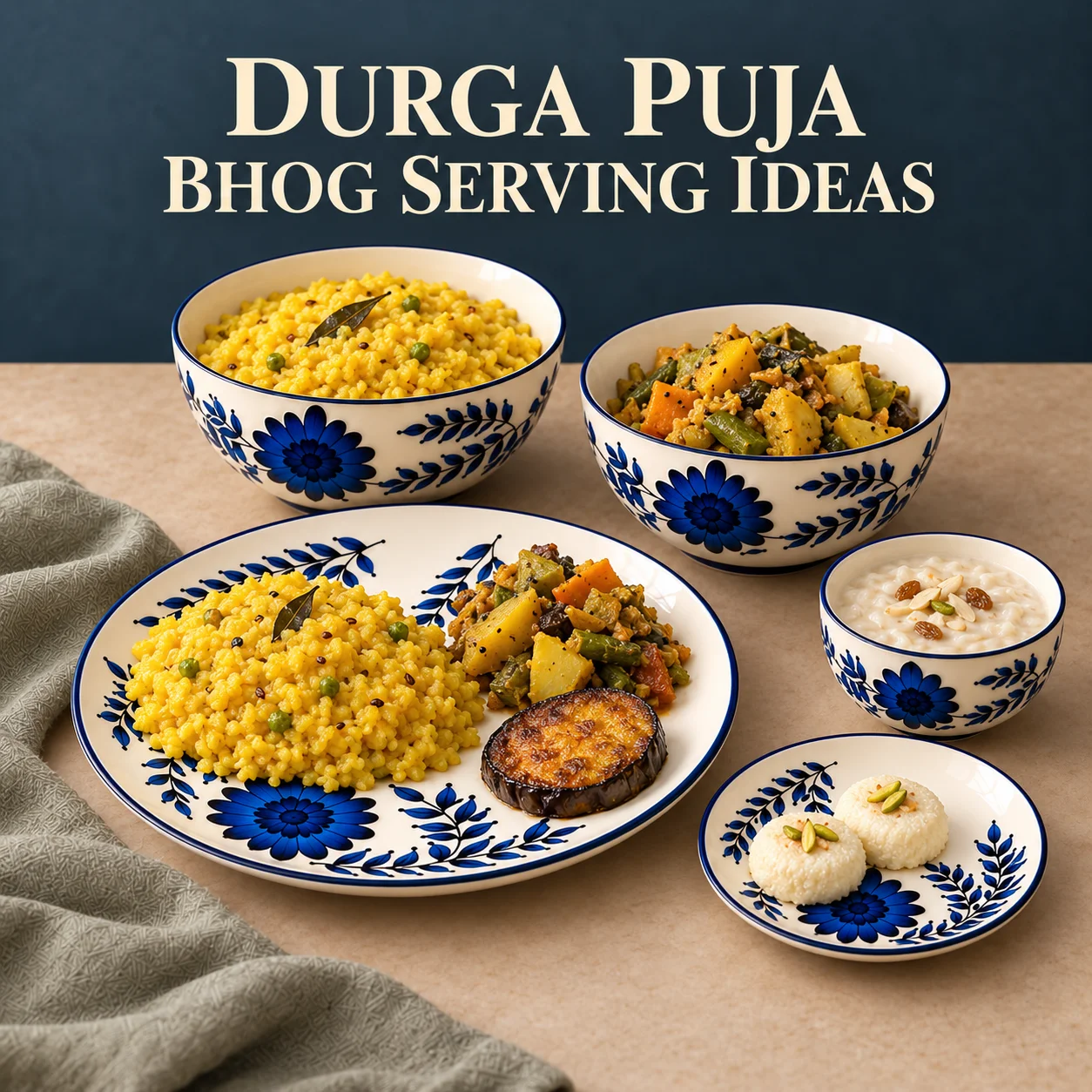
Durga Puja Bhog Serving Ideas: How to Arrange a Thoughtful Festive Thali
Durga Puja is a celebration of devotion, community and food shared with family and friends. From comforting bhoger khichuri and labra to chutney, payesh and mishti, every preparation brings a distinct flavour and texture to the festive meal.
Thoughtful presentation does not mean filling the dining table with decoration. The best Durga Puja bhog serving ideas begin with practical questions: How many people will be eating? Which dishes need bowls? Where will refills be kept? Does every preparation have its own serving spoon?
This guide explains how to organise a Durga Puja bhog thali using suitable plates, katoris, serving bowls and drinking glasses—while keeping the arrangement comfortable, attractive and manageable at home.
Recipes and customs differ across families and regions. Follow the traditions observed in your household and use this article as a flexible serving guide.
Quick Answer: How Should Durga Puja Bhog Be Served?
Serve bhog on a stable dinner plate with sufficient usable space. Use individual katoris for payesh, chutney or other spoonable dishes. Keep khichuri, labra and shared preparations in separate serving bowls with dedicated spoons.
For an organised setup, divide the area into four zones:
- Individual place settings:Shared serving bowls
- Kitchen refill containers:Used-crockery collection
Keep water glasses on a nearby side table if the dining table is small.
What Is Commonly Included in a Durga Puja Bhog Thali?
A traditional Bengali bhog menu may include:
The menu varies according to family and community practices. Some households prepare a simple meal, while others include several vegetable preparations, fried accompaniments and desserts.
Finalise your menu before selecting the serveware. The number and consistency of the dishes should determine how many plates and bowls you need.
Durga Puja Bhog Serving Checklist
Before your guests arrive, prepare:
Count each item manually. Do not assume that a 14-piece dinner set serves fourteen people—the piece count may include plates, small bowls and serving bowls.
Choose the Right Plate for a Durga Puja Bhog Thali
A festive bhog plate may need to hold khichuri, vegetables, fried accompaniments, chutney and papad. Choose a plate with enough usable eating space inside the rim.
Check:
The nestcase beige dinner plates with black rims provide a neutral background that allows the colours of a Bengali bhog menu to remain prominent.
For six simultaneous place settings, prepare six plates. For a larger group, either arrange additional crockery or plan separate seating groups with sufficient time to clean and reset the dining area.
When Should You Use Individual Katoris?
A katori is useful when a preparation is liquid, semi-liquid, served with a spoon or likely to spread across the plate.
Individual bowls may be used for:
Avoid adding empty bowls only to make the table look elaborate. Every piece of crockery should have a clear function.
The nestcase olive-green 14-piece dinner set includes six dinner plates, six small bowls and two serving bowls. This composition can support a coordinated meal for six when it matches the planned menu.
Match Every Bhog Preparation to Suitable Serveware
Different dishes need different forms of containment. These Durga Puja bhog serving ideas match the vessel to the food rather than choosing serveware only by appearance.
Khichuri
Serve khichuri in a broad, sufficiently deep bowl. Leave enough headroom so it can be carried and served comfortably.
For a larger gathering, keep only a manageable quantity on the table. Refill it from a suitable kitchen vessel when required.
Labra and Vegetable Preparations
Use a medium or large serving bowl for labra and other vegetable dishes. Give every bowl its own serving spoon.
Begun Bhaja, Papad and Dry Accompaniments
Dry or fried accompaniments can be presented on a plate or shallow platter. Keep them away from wet dishes until they are served.
Chutney
Use a smaller serving bowl and a proportionately sized spoon. Position it away from the edge of the table to reduce the risk of spills.
Payesh
Keep payesh in a suitable shared bowl and portion it into individual katoris. Follow appropriate preparation, holding and storage guidance.
The nestcase olive-green ceramic serving bowls can be used for two complementary shared dishes while maintaining a coordinated table.
Keep Presentation Bowls and Refill Containers Separate
One of the most useful bhog-serving strategies is to separate the display quantity from the complete prepared quantity.
Use:
This keeps the dining table from becoming overcrowded and avoids carrying large cooking vessels into the guest area.
Do not transfer food into an unsuitable decorative container merely for appearance.
Create a Simple Serving Order
A defined sequence makes Durga Puja food at home easier to manage.
A practical serving order is:
- Seat guests and provide water.
- Serve khichuri.
- Add labra and other vegetables.
- Serve fried accompaniments.
- Offer chutney according to preference.
- Provide refills after the initial portion.
- Clear sufficient space before serving payesh or mishti.
Adapt this order to your family’s customary practice.
Set Up a Separate Water Station
Water bottles and glasses can occupy valuable space in the centre of the dining table. In a smaller home, create a separate hydration station on a counter or side table.
Include:
The nestcase 300 ml geometric-cut clear glasses can be used for water, juice or suitable non-alcoholic beverages.
In the blog copy and image alt text, describe them as clear 300 ml drinking glasses rather than emphasising their marketplace barware name.
How to Arrange Durga Puja Bhog in a Small Home
You do not need a large dining room to create a well-organised Durga Puja bhog thali setup.
Individual dining zone
Set only the plates, katoris and glasses required for the current group.
Shared-food zone
Position the active serving bowls together on one side of the table or on a nearby console.
Kitchen refill zone
Keep additional food in clearly identified containers in the kitchen.
Used-crockery zone
Place used plates and glasses away from fresh food, clean crockery and refill containers.
This four-zone layout creates a clear movement path and makes the space easier to reset.
How Much Food Should Be Served Initially?
Begin with a moderate serving and offer refills.
The initial portion should reflect:
Avoid filling every plate before guests are seated. Smaller initial portions with convenient refills can help reduce unnecessary food waste.
How to Style the Table Without Overdecorating It
Durga Puja table styling should complement the meal rather than obstruct it.
Try:
Keep candles, flowers, religious objects and decorative accessories away from active food-serving areas. Do not use religious symbols merely as photographic props.
A premium festive table is created through colour discipline, practical spacing and considered serveware—not excessive decoration.
Common Durga Puja Bhog Serving Mistakes
Avoid:
Five-Minute Check Before Serving
Before inviting guests to sit, confirm that:
FAQs About Durga Puja Bhog
What is served in a Durga Puja bhog thali?
A Bengali bhog menu commonly includes khichuri, labra, fried vegetables, chutney, papad, payesh and mishti. The exact menu varies among families and communities.
Which plate is best for Durga Puja bhog?
Use a stable dinner plate with enough usable space for the planned preparations. Check the eating surface inside the rim rather than relying only on the total diameter.
Is a katori required for every guest?
A katori is helpful when serving payesh, chutney or another spoonable preparation. It is unnecessary when every menu item can be served comfortably on the plate.
How many serving bowls do I need?
Count the wet and shared preparations on your menu. Each should ideally have an appropriate serving bowl and dedicated spoon.
Can khichuri be served in a ceramic bowl?
It can be served in a suitable ceramic bowl when the bowl’s condition, capacity and care guidance support that use. Avoid exposing ceramic products to sudden temperature changes unless the manufacturer permits it.
How should payesh be served?
Keep payesh in an appropriate shared serving bowl and transfer it into individual katoris. Follow suitable food-handling and storage guidance.
How can I serve bhog in a small apartment?
Create separate areas for dining, shared serving, kitchen refills and used crockery. Set only the number of place settings required for the current seating group.
Can mismatched dinnerware be used?
Yes. Cleanliness, comfort and organisation are more important than perfect matching. Use a consistent colour family or bowl style to make the arrangement feel coordinated.
How can I reduce food waste?
Prepare according to confirmed attendance, serve moderate initial portions and offer refills.
Can festive dinnerware be used after Durga Puja?
Yes. Practical plates, bowls and glasses should remain useful for everyday meals, family gatherings and other occasions.
Create a More Considered Durga Puja Table
The best Durga Puja bhog serving ideas are not about adding more objects to the table. They are about giving every dish the right vessel, keeping refills organised and making guests comfortable.
Explore nestcase dinner sets, bowls and platters and glassware to create a festive arrangement that remains useful long after Durga Puja.