
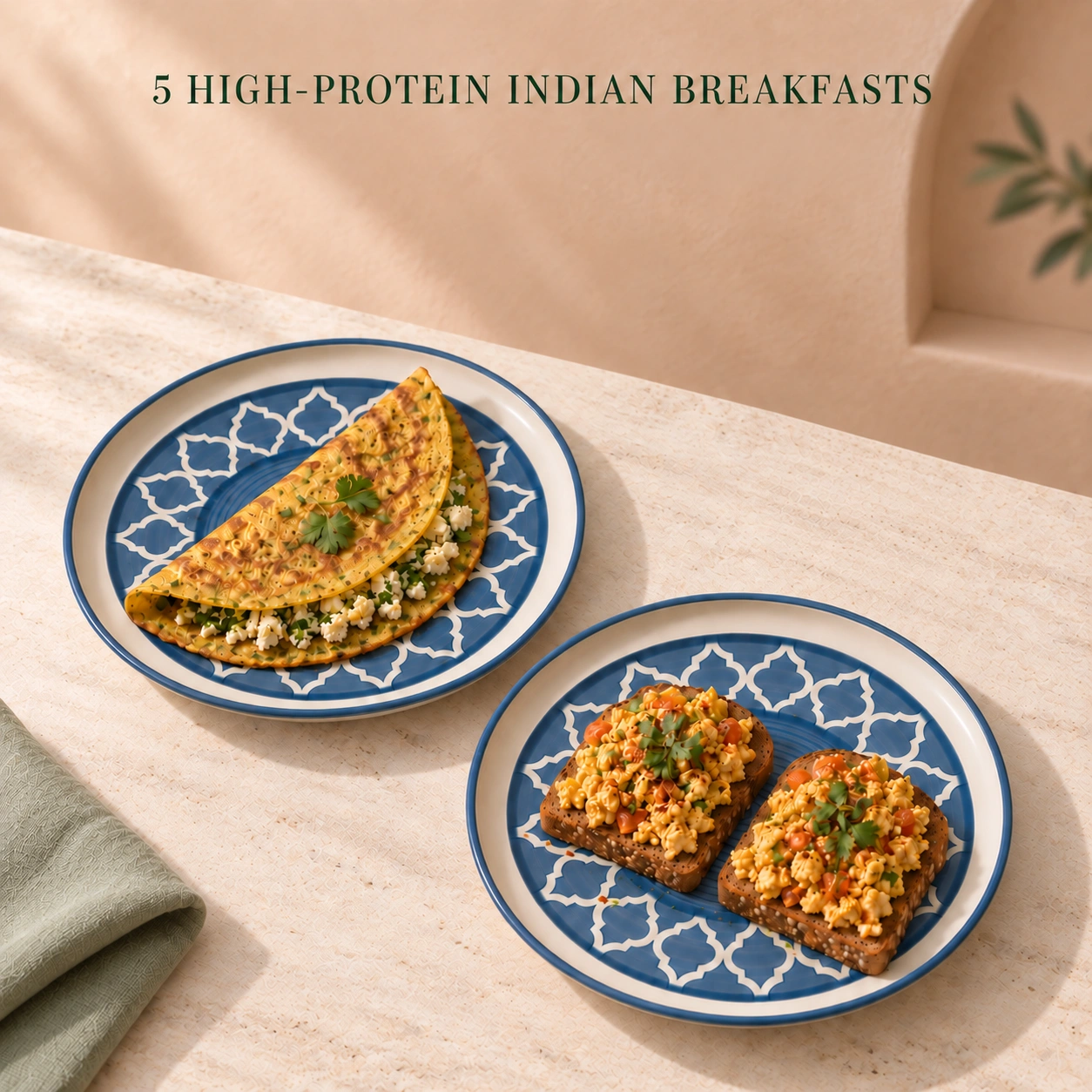
5 High-Protein Indian Breakfasts Ready in 15 Minutes
A high protein Indian breakfast does not have to mean protein powder, complicated meal prep or eating the same bowl of sweet oats every morning. Familiar ingredients such as moong dal, besan, paneer, curd, sprouts and oats can be combined into quick savoury breakfasts that are satisfying and realistic for busy weekdays.
These five high protein vegetarian breakfast recipes are designed for approximately 15 minutes of active morning cooking or assembly. Where an ingredient needs soaking, sprouting or advance chopping, that work is stated clearly. Prepare those elements earlier; the clock should not hide overnight preparation.
| Quick answer: Choose one protein-rich base, add vegetables or fruit, include a sensible carbohydrate source and keep the method simple enough to repeat. The five recipes below use ordinary Indian ingredients and require no protein powder. |
Five breakfasts at a glance
| Breakfast | Character | Advance preparation | Serving idea |
| Paneer moong chilla | Soft-centred, crisp-edged | Prepared moong batter | Plate + curd katori |
| Besan vegetable chilla | Warm and savoury | No soaking | Dinner plate |
| Paneer bhurji toast | Comforting and familiar | Chopped vegetables | Snack plate |
| Sprouted-moong curd bowl | Fresh and no-fry | Cooked sprouts | Medium bowl |
| Masala oats with paneer | Creamy and filling | No soaking | Handled bowl |
Before you start: make the 15-minute promise realistic
Soak the moong dal and blend the batter the previous evening, then refrigerate it in a clean covered container.
Use commercially purchased sprouts or properly prepared sprouts; cook them when required rather than assuming raw sprouts are suitable for everyone.
Chop onions, tomatoes, capsicum and coriander in advance and refrigerate them safely in separate covered containers.
Keep paneer, curd and other perishable ingredients refrigerated until you begin cooking.
Measure ingredients before heating the pan. This makes the morning cooking time far more predictable.
1. Paneer-Stuffed Moong Dal Chilla
ACTIVE TIME 15 minutes | TOTAL TIME 15 minutes + advance soaking | SERVES 1 | PREP Prepare batter ahead
Moong dal and paneer make this a practical quick protein breakfast with familiar Indian flavours. The rested batter produces a tender chilla, while the paneer filling adds texture and makes the dish substantial enough for a weekday breakfast.
Ingredients
1/2 cup thick moong dal batter, prepared from soaked yellow moong dal
75 g paneer, crumbled
2 tablespoons finely chopped onion, optional
2 tablespoons finely chopped capsicum
1 tablespoon chopped coriander
1/4 teaspoon roasted cumin powder
A pinch of turmeric and chilli powder, adjusted to taste
Salt to taste
1 teaspoon oil, divided
2 tablespoons plain curd for serving
Method
Combine the paneer, capsicum, coriander, cumin, chilli powder and a small pinch of salt.
Season the prepared moong batter with turmeric and salt. Add a spoonful of water only if it is too thick to spread.
Heat a flat pan over medium heat and lightly grease it. Spread the batter into one medium chilla.
Cook until the upper surface begins to set and the underside releases easily. Turn carefully.
Place the paneer mixture over one half, fold the chilla and cook briefly until the filling is warm. Serve immediately with curd.
| Make it work: Do not overfill the chilla. A smaller amount of evenly spread paneer makes folding easier and reduces tearing. |
nestcase serving idea: Use one 25 cm dinner plate and one 220 ml katori for curd or chutney.
2. Besan Vegetable Chilla with Curd
ACTIVE TIME 12-15 minutes | TOTAL TIME 12-15 minutes | SERVES 1 | PREP None
This breakfast without protein powder uses besan and curd, two everyday ingredients that need no soaking. Keep the vegetables finely chopped so the chilla cooks quickly and remains easy to turn.
Ingredients
1/2 cup besan
2 tablespoons finely chopped onion, optional
2 tablespoons grated carrot
2 tablespoons finely chopped tomato with excess seeds removed
1 tablespoon chopped coriander
1/4 teaspoon ajwain
A pinch each of turmeric and chilli powder
Salt to taste
Water as required for a pourable batter
1 teaspoon oil, divided
1/2 cup plain curd for serving
Method
Whisk the besan, ajwain, turmeric, chilli powder and salt with enough water to create a smooth, pourable batter.
Fold in the onion, carrot, tomato and coriander. Rest for two minutes while the pan heats.
Lightly grease a medium-hot pan and spread half the batter into a thin chilla.
Cook until the edges look set, turn and cook the second side. Repeat with the remaining batter.
Serve the two chillas hot with plain curd.
| Texture check: If the chilla breaks, the batter may be too thin or the first side may not be set. Add a little besan or allow more cooking time before turning. |
3. Paneer Bhurji Breakfast Toast
ACTIVE TIME 15 minutes | TOTAL TIME 15 minutes | SERVES 1 | PREP Vegetables may be chopped ahead
Paneer bhurji toast brings a familiar Indian filling to a convenient breakfast format. It is one of the easiest healthy Indian breakfast recipes to customise: reduce the chilli for children, add spinach or replace the toast with a roti when preferred.
Ingredients
100 g paneer, crumbled
2 slices whole-grain bread
2 tablespoons finely chopped onion, optional
2 tablespoons chopped tomato
2 tablespoons finely chopped capsicum
1/4 teaspoon cumin seeds
A pinch each of turmeric, chilli powder and garam masala
Salt to taste
1 teaspoon oil
Coriander and a squeeze of lime to finish
Method
Toast the bread on a dry pan or in a toaster until crisp enough to hold the filling.
Heat the oil in a pan and add cumin. Add the onion and capsicum, then cook briefly while retaining some texture.
Add tomato, turmeric, chilli powder and salt. Cook only until the tomato softens.
Fold in the paneer and garam masala. Cook just until heated through; prolonged cooking can make the paneer dry.
Spoon the bhurji over the toast and finish with coriander and lime. Serve immediately.
| Serving tip: Keep the toast and bhurji separate until the final minute if you are carrying breakfast to another room; this helps the bread stay crisp. |
4. Sprouted-Moong and Curd Breakfast Bowl
ACTIVE TIME 10 minutes | TOTAL TIME 10 minutes with prepared sprouts | SERVES 1 | PREP Sprouts must be ready
For mornings when you do not want another hot breakfast, this bowl combines cooked sprouted moong, thick curd and crunchy vegetables. Cooking the sprouts before assembly provides a softer texture and is a more cautious option than automatically serving them raw.
Ingredients
3/4 cup sprouted moong, cooked and cooled
1/2 cup thick plain curd
1/4 cup diced cucumber
2 tablespoons finely chopped tomato
1 tablespoon roasted peanuts or seeds, optional
1 tablespoon chopped coriander
1/4 teaspoon roasted cumin powder
A pinch of chaat masala, optional
Salt and lime juice to taste
Method
Check that the cooked sprouts are cool before combining them with curd.
Whisk the curd with cumin, salt and a small squeeze of lime.
Fold in the sprouts, cucumber, tomato and coriander.
Transfer to a bowl and finish with peanuts or seeds immediately before eating.
| Food-safety note: Keep cooked sprouts and curd refrigerated, use clean utensils and avoid leaving the assembled bowl at room temperature for an extended period. |
5. Masala Oats with Paneer and Vegetables
ACTIVE TIME 15 minutes | TOTAL TIME 15 minutes | SERVES 1 | PREP None
Savoury masala oats are useful for readers who dislike sweet breakfast bowls. Paneer and vegetables turn plain oats into a warm, spoonable breakfast that can be served in a generous bowl without needing several side dishes.
Ingredients
1/2 cup rolled oats
75 g paneer, cut into small cubes or crumbled
1/4 cup mixed finely chopped vegetables
1 small tomato, finely chopped
1/4 teaspoon cumin seeds
A pinch each of turmeric and chilli powder
1 to 1 1/4 cups hot water, adjusted for the oats used
Salt to taste
1 teaspoon oil
Coriander and lime to finish
Method
Heat the oil in a saucepan and add cumin. Add the vegetables and cook for two to three minutes.
Add tomato, turmeric, chilli powder and salt. Cook until the tomato begins to soften.
Stir in the oats and hot water. Simmer according to the oat package instructions, stirring as needed.
Fold in the paneer during the final two minutes, adding a splash of water if the mixture becomes too thick.
Finish with coriander and lime, then serve hot.
| Consistency tip: Stop cooking while the oats remain slightly loose. They continue thickening as they stand in the serving bowl. |
How to build a better high protein Indian breakfast
Protein is only one part of breakfast. A practical meal can also include vegetables or fruit, a fibre-containing carbohydrate and an appropriate amount of fat. ICMR-NIN guidance recognises pulses and milk products as important contributors within Indian diets; individual requirements still vary by age, body size, activity and health status.
Start with a protein-rich ingredient: dal, besan, paneer, curd, sprouts, tofu or another suitable option.
Add vegetables for colour, texture and variety rather than relying on a single ingredient.
Use oats, whole-grain bread, roti or another familiar carbohydrate according to your needs.
Keep oil, sugary sauces and oversized toppings measured rather than assuming every homemade addition is automatically healthy.
Rotate ingredients through the week instead of treating one recipe as nutritionally complete on its own.
A practical Sunday preparation plan
Soak and blend one small batch of moong batter. Refrigerate safely and use within a conservative, tested storage window.
Prepare or purchase sprouts, then cook and cool the portion intended for the breakfast bowl.
Wash and dry vegetables. Chop only the amount that can be stored safely and used promptly.
Portion paneer for the chilla, bhurji and oats so that weekday assembly is faster.
Place curd, cooked sprouts and paneer in clearly labelled refrigerated containers.
Common mistakes to avoid
Counting soaking or sprouting as zero preparation while promising a 15-minute recipe
Calling a meal high protein without checking its actual ingredients and serving size
Adding so many vegetables that a chilla becomes difficult to turn
Cooking paneer for too long and making it dry
Using watery curd in a breakfast bowl
Serving sprouts raw without considering food-safety risks
Making oats too thick before transferring them to the bowl
Assuming that high protein automatically means suitable for every medical or weight-management goal
Frequently asked questions
What is a good high protein Indian breakfast?
A useful option combines a meaningful protein source such as dal, besan, paneer, curd or sprouts with vegetables and an appropriate carbohydrate. The best choice depends on the complete serving, not one ingredient alone.
Can a vegetarian breakfast be high in protein without protein powder?
Yes. A breakfast without protein powder can use paneer, curd, pulses, besan, tofu, sprouts, nuts and seeds. Quantities and total protein vary by recipe and brand.
Can these breakfasts really be prepared in 15 minutes?
The active morning cooking or assembly is designed for about 15 minutes. Moong batter, sprouts and chopped vegetables require advance preparation, which is stated separately.
Which breakfast requires no soaking?
Besan vegetable chilla, paneer bhurji toast and masala oats require no overnight soaking when all ingredients are available.
Can moong dal chilla batter be prepared in advance?
Yes, but storage time depends on preparation hygiene and refrigeration. Use a clean covered container and establish a conservative tested storage period before publishing a specific duration.
Are raw sprouts safe for everyone?
Raw sprouts can carry food-safety risks. Cooking them is a more cautious option, especially for children, older adults, pregnant people and anyone with reduced immunity.
Can paneer be replaced with tofu?
Firm tofu can work in the chilla, bhurji and oats, although flavour, moisture and cooking behaviour will differ.
Are these recipes suitable for weight loss?
No single recipe guarantees weight loss. Suitability depends on total portions, ingredients, activity, overall diet and individual health needs.
How can I stop besan chilla from breaking?
Use a smooth batter that is not excessively thin, cook the first side until set and turn it only when the edges release easily.
Which nestcase products suit these breakfasts?
A 25 cm plate works for chillas and toast, a 220 ml katori suits curd or chutney, and a larger bowl works for sprouts or masala oats.
Serve breakfast with less clutter
A quick breakfast should not create a crowded table. Serve chillas and toast on one dinner or snack plate, use one small katori for curd or chutney, and choose one generous bowl for sprouts or savoury oats. Bring only the pieces required for that recipe rather than displaying a full dinner set every morning.
Explore: Dinner Plates | Bowls & Platters | Cups & Mugs