
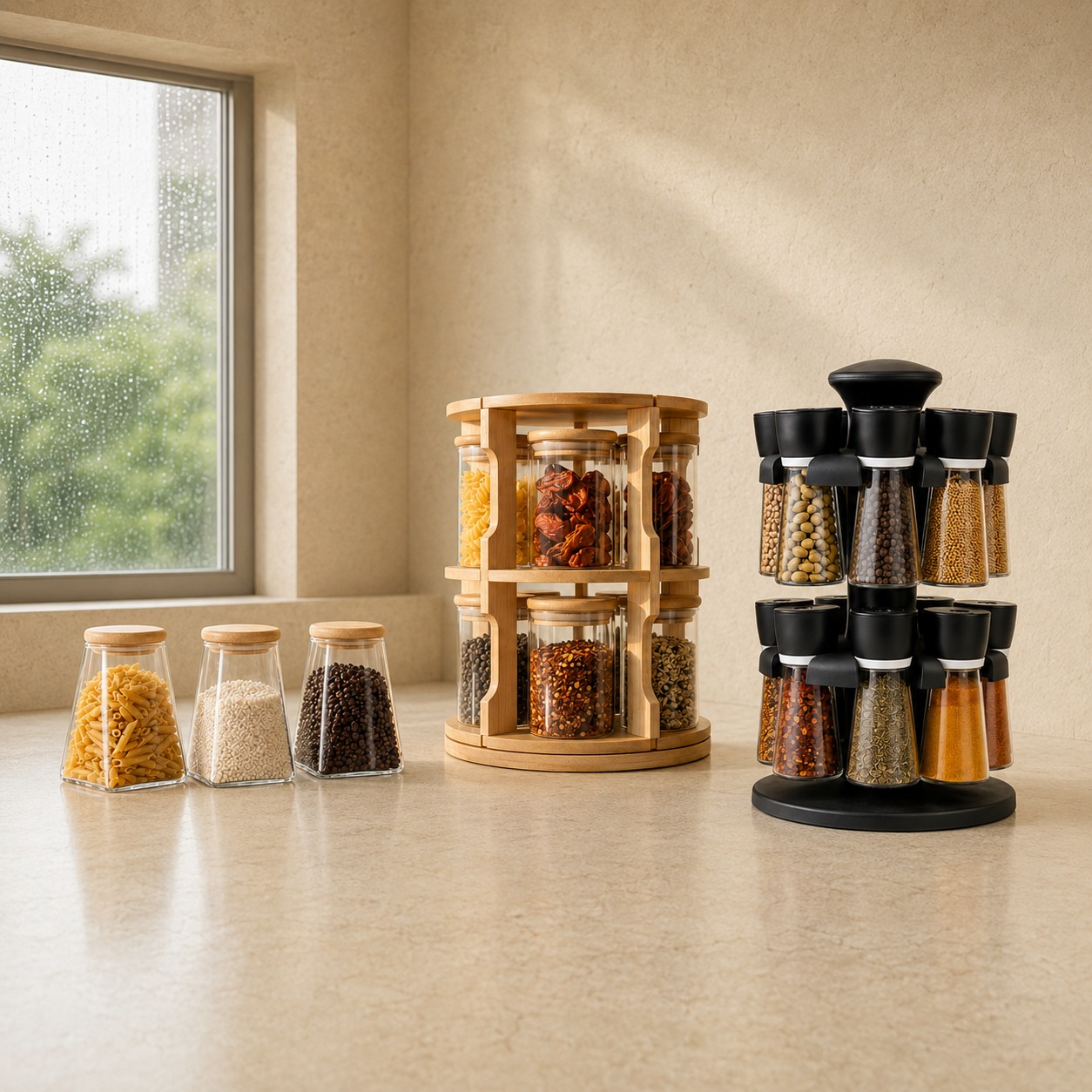
How to Keep Spices Fresh During the Monsoon
Monsoon humidity can make powdered masalas clump, reduce their aroma and introduce moisture into poorly sealed containers. The problem becomes worse when spice jars are kept near the stove, sink or a sunny window.
The simplest answer to how to store spices in monsoon is to use clean, completely dry and tightly sealed containers. Keep them in a cool, dark place away from cooking steam and water.
Quick answer: How can you keep spices fresh during the monsoon?
To keep masalas fresh during humid weather:
- Transfer spices into clean and completely dry containers.
- Use airtight spice containers with secure lids.
- Keep spices away from the stove, sink and sunlight.
- Always use a clean, dry spoon.
- Close every container immediately after use.
- Store frequently used masalas in smaller quantities.
- Label containers with the spice name and opening date.
- Discard spices showing mould, insects or a musty smell.
Why do spices become damp during the monsoon?
Dry spices can absorb moisture from humid air when their packets or containers remain open. Fine powders such as turmeric, chilli powder, coriander powder and garam masala may then become lumpy.
Moisture commonly enters through:
Spices also contain natural oils responsible for their aroma and flavour. Exposure to air can gradually oxidise these oils. Utah State University Extension recommends keeping spices in airtight packaging because oxidation can affect their flavour and colour. Read the food-storage guidance.
1. Use completely dry spice containers
Before transferring spices, wash the container according to its care instructions and allow every part to dry completely.
Check:
Even a small amount of water can introduce moisture into powdered masala. Never refill a container immediately after washing it.
Avoid continuously mixing new spices with an older batch. Empty the jar, clean it and allow it to dry before adding fresh stock.
2. Choose appropriately sized airtight containers
Good airtight spice containers should have lids that close securely after repeated everyday use.
Choose the size according to how quickly you consume each spice:
Smaller containers limit how much humid air enters whenever they are opened.
Clear glass spice jars make it easier to identify the contents and check the remaining quantity. Because transparent containers allow light to enter, keep them inside a cabinet or away from direct sunlight.
For organised dry storage, explore nestcase spice jars and kitchen organisers.
Remember that an airtight lid cannot repair spices already affected by moisture. Always transfer dry spices into clean and dry containers.
3. Keep your spice rack away from steam and water
The area directly above the stove may be convenient, but it is regularly exposed to heat and cooking steam.
Avoid positioning a spice rack for kitchen use:
Instead, place your kitchen spice organiser inside a dry cabinet or on a clean counter away from the main cooking and washing zones.
A rotating spice rack can make frequently used masalas easier to access. However, its location is just as important as its design.
For daily masala organisation, consider a nestcase rotating spice rack for the kitchen. Before purchasing, verify the number of jars, individual jar capacity and overall rack dimensions.
4. Always use a clean, dry spoon
Using a wet spoon is one of the easiest ways to introduce moisture into spices.
Do not:
If a spoon becomes wet, replace it. Do not assume that quickly wiping it will remove all the moisture.
This simple habit can help prevent spices from clumping in everyday Indian kitchens.
5. Never hold an open jar over a steaming pan
Steam can enter an open spice container when it is held directly above a boiling pan.
Use this method instead:
- Take the required masala with a dry spoon.
- Place it in a small, dry bowl.
- Close the main spice container.
- Add the measured spice to the dish.
This protects the remaining masala and also helps prevent accidental over-seasoning.
The method is particularly useful when preparing dal, curries, gravies and other dishes that release significant steam.
6. Store spices in smaller working batches
Buying spices in bulk may be economical, but repeatedly opening a large packet exposes the entire quantity to humid air.
A better monsoon kitchen storage system uses:
Refill the working jar only after it has been emptied, cleaned and completely dried.
This works particularly well for turmeric, chilli powder, coriander powder and garam masala. Smaller quantities also make it easier to detect changes in aroma, colour or texture before a large batch is affected.
For reserve quantities of suitable dry ingredients, explore nestcase airtight storage containers. Verify the lid type, product capacity and recommended storage uses before ordering.
7. Consider storing selected spices whole
Whole spices generally expose less surface area to air than finely ground spices. Buying selected spices whole and grinding smaller quantities when required may help retain their aroma.
Suitable options include:
Store whole spices using the same precautions: secure containers, dry utensils and protection from heat, light and moisture.
8. Label and organise every jar
Labels improve Indian kitchen organisation and reduce unnecessary opening of containers.
Each label should include:
Arrange spices in three groups:
This system makes ingredients easier to find and helps maintain a more organised cooking space.
Common monsoon spice-storage mistakes
Keeping masalas above the stove
This exposes the containers to heat and steam.
Refilling a damp jar
Moisture may remain around the lid or sealing ring even when the container appears dry.
Leaving spices in opened packets
Folded or clipped packets may not provide dependable protection from humidity.
Using oversized containers
Large containers allow more humid air to enter whenever they are opened.
Mixing old and new batches
Continuous topping up makes freshness difficult to track and can transfer old residue.
Refrigerating dried spices unnecessarily
Moving containers between cold and warm environments may create condensation. Follow any specific storage instructions printed on the spice packaging.
When should spices be discarded?
Check spices regularly for:
Clumping does not always prove that a spice is unsafe, but it indicates possible moisture exposure. Never taste visibly mouldy or suspicious spices to test them.
Recommended nestcase products
Rotating spice racks
A rotating rack can keep frequently used masalas visible and accessible.
Explore nestcase rotating spice racks
Pyramidal glass storage jars
Different jar capacities can help separate small working quantities from reserve ingredients.
Explore nestcase glass spice jars
Airtight storage containers
Larger containers may be suitable for reserve quantities of compatible dry pantry ingredients.
Explore nestcase storage jars and containers
Always verify the exact capacity, number of pieces, sealing mechanism, stock availability and care instructions on the individual product page.
Final monsoon spice-storage checklist
Confirm that:
The best solution for how to keep spices fresh combines suitable containers with careful everyday habits. Secure lids, dry spoons, smaller batches and sensible placement can help keep masalas organised and ready for daily cooking.
Frequently asked questions
What is the best way to keep masalas fresh?
Store masalas in clean, dry containers inside a cool cabinet. Keep them away from sunlight, steam and water, and use only a dry spoon.
Can spices be stored in glass jars during monsoon?
Yes. Glass jars with properly fitting lids can be used for dry spices. Keep transparent jars away from direct sunlight.
How can I prevent spice powders from clumping?
Reduce exposure to humidity. Use sealed containers, dry spoons and smaller working batches. Never hold an open jar over a steaming pan.
Should dried spices be refrigerated?
Most dried spices can be stored in a cool, dry cabinet. Refrigeration may create condensation when containers move into a warm kitchen.
How should spice containers be cleaned?
Empty and wash the container according to its care instructions. Clean the lid and sealing ring, then allow every component to dry completely before refilling.