
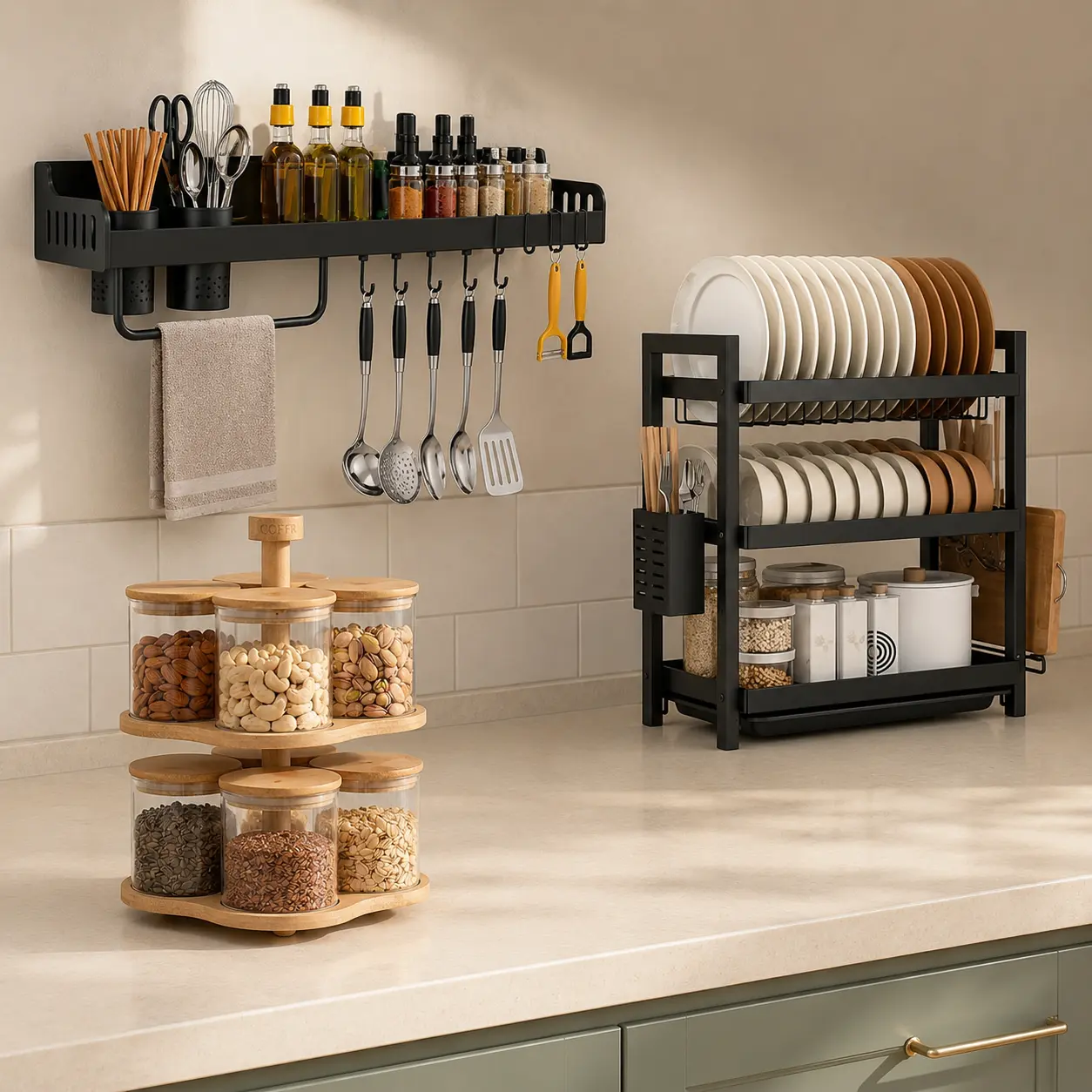
How to Organise Everyday Kitchen Essentials Without Cluttering Your Counter
A kitchen counter should make everyday cooking easier, but it often becomes the place where spice packets, tea containers, appliances, mugs and miscellaneous household items accumulate. The solution is not to hide everything inside a cabinet. It is to decide what genuinely deserves space on the counter and give each essential a clearly defined home.
These kitchen counter organization ideas will help you create a practical, attractive and clutter-free kitchen while keeping frequently used products within easy reach. The approach works for large kitchens as well as compact urban homes with limited counter and cabinet space.
The key is simple: organise the counter according to how you use your kitchen—not according to how a staged kitchen photograph looks.
Quick Answer: How Do You Organise a Kitchen Counter?
To organise a kitchen counter effectively:
- Remove everything from the counter.
- Discard or relocate items that do not belong in the kitchen.
- Keep only products used several times each week.
- Divide the counter into brewing, cooking and serving zones.
- Group similar items in coordinated jars, stands or trays.
- Use vertical space when the counter is small.
- Leave enough empty space for food preparation.
- return every product to its assigned position after use.
Good kitchen countertop organization balances three things: accessibility, available space and visual consistency.
Why Do Kitchen Counters Become Cluttered?
Kitchen counters rarely become cluttered because of one large object. Visual clutter usually develops as numerous small products are added without a defined system.
Common causes include:
Before purchasing more organisers, identify what is creating the problem. The most effective countertop storage ideas begin with reducing unnecessary products rather than adding another container to an already crowded surface.
Use the Brew–Cook–Serve System
Instead of spreading essentials across the entire counter, divide the available space into three functional areas.
| Counter zone | What belongs there | Suitable storage |
|---|---|---|
| Brew zone | Tea, coffee, sugar, mugs and spoons | Coordinated jars, mug stand or compact tray |
| Cook zone | Frequently used spices, oil and seasonings | Spice rack, jar stand or accessible shelf |
| Serve zone | Bowls, trays and items used during meals | Serving tray, bowl pair or nearby cabinet |
This system gives every product a logical home. It also prevents tea ingredients from mixing with cooking spices or serving products from occupying the main preparation area.
1. Create a Dedicated Tea and Coffee Station
A tea and coffee station should contain only the products needed to prepare regular beverages. It does not need to become a display of every cup, ingredient and appliance you own.
Keep together:
The nestcase Ceramic Tea and Sugar Jars with Stand—Set of 2, 500 ml each can keep two frequently used ingredients together without spreading separate containers across the counter.
Effective tea coffee station organization depends on restraint. Keep reserve packets and occasionally used ingredients inside a cabinet. Refill the working containers only when necessary.
How much space should a tea station use?
The station should occupy only the space required for regular preparation. Leave clearance around kettles and other electrical appliances according to their manufacturer’s instructions. Avoid placing storage jars where steam, splashes or direct heat may affect them.
If several family members use the station, position the most frequently handled products at the front.
2. Organise Spices According to Cooking Frequency
A beautiful collection of spice jars can still become clutter if the jars are difficult to identify or arranged without considering the cooking routine.
Divide spices into three groups:
- Everyday ground spices
- Frequently used whole spices
- Occasional or recipe-specific blends
Place everyday spices in the easiest positions. Less frequently used ingredients can remain on the upper level, at the back or inside a pantry.
The nestcase Rotating Two-Tier Borosilicate Spice Jar Set—8 jars, 370 ml each can help keep regularly used masalas together while using vertical space.
Good spice rack organization should make cooking faster, not simply make the jars look symmetrical.
Practical spice-rack checklist
Before positioning a spice rack, check:
Follow the product instructions and the storage requirements of individual ingredients. Do not assume that every spice or seasoning should remain beside the stove.
3. Replace Open Packets with Coordinated Working Jars
Open packets create visual noise and can be inconvenient during everyday use. Transfer appropriate dry ingredients into clean, suitable containers while retaining the original packaging or essential product information where necessary.
Possible counter ingredients include:
The nestcase Pyramidal Glass Storage Jars—Set of 3 includes three sizes—800 ml, 520 ml and 420 ml—allowing ingredients to be grouped according to quantity and frequency of use.
Use kitchen storage jars as working containers rather than attempting to transfer the kitchen’s entire pantry onto the counter. Bulk ingredients and refill packets should generally remain inside cabinets or pantry storage.
How to arrange three jars without creating clutter
Arrange the jars using one consistent principle:
Leave a deliberate gap between the jar group and other appliances. This negative space makes the arrangement feel intentional and keeps the counter easier to clean.
4. Use a Consistent Colour and Material Palette
An organised counter can still look busy when it contains too many unrelated colours, patterns and materials.
Choose a simple visual palette such as:
This does not mean every product must match exactly. The aim is to repeat one or two visual elements so the arrangement feels connected.
For example, wooden lids can connect different glass jars, while similar ceramic finishes can coordinate a tea station. Thoughtful aesthetic kitchen storage should support the kitchen’s daily routine rather than turning functional products into untouchable decoration.
5. Keep Only Frequently Used Appliances Outside
Toasters, mixers, blenders, kettles and coffee machines can quickly consume valuable preparation space.
Ask four questions about each appliance:
- How frequently is it used?
- Is it safe and practical to store elsewhere?
- Can it be lifted easily from a cabinet?
- Does it need permanent ventilation or clearance?
Keep genuinely frequent-use appliances accessible. Relocate occasional appliances when storage and safe handling allow.
One of the most effective small kitchen storage ideas is to protect one clear working area instead of placing appliances along every available centimetre of the counter.
6. Use Vertical Space Carefully
When a kitchen has limited counter space, vertical organisation can improve capacity without spreading products horizontally.
Possible solutions include:
Do not build vertical storage so high that products become difficult to reach or unstable. Leave enough clearance to lift jars and clean every shelf.
These small kitchen storage ideas work best when the upper level holds lightweight or less frequently used products while daily essentials remain comfortably accessible.
7. Group Loose Items on a Tray or Stand
Several small objects placed separately can look untidy even when each object is useful. A tray or coordinated stand visually turns them into one organised group.
A tray may hold:
However, a tray is not permission to collect unlimited products. If it becomes crowded or difficult to lift, reduce its contents.
Among the simplest countertop storage ideas, grouping related essentials is effective because it makes wiping the surrounding surface easier and prevents products from gradually spreading.
8. Avoid Filling Decorative Jars to the Rim
A completely full jar can be difficult to open, scoop from or carry. Leave sensible working space according to the ingredient and container design.
Before filling a jar:
Good kitchen countertop organization includes safe, practical refilling—not only attractive product placement.
9. Give Mugs and Serving Bowls a Defined Home
Leaving several unrelated mugs on the counter can make even a coordinated beverage area appear untidy.
Keep only the quantity regularly required. Place additional mugs inside a cabinet. If mugs are displayed, maintain enough space around their handles so they can be lifted without moving other products.
Serving bowls should generally remain inside a cabinet unless they are used daily or contain suitable food that can safely remain outside. A decorative bowl can hold fruit or individually wrapped items, but it should not reduce the counter’s usable preparation area.
This distinction is important when creating a clutter-free kitchen: products should remain visible because they are useful, not simply because there is an empty corner.
10. Measure Before Buying Countertop Organisers
Product photographs can make racks and jars appear smaller than they are. Measure the intended area before purchasing any organiser.
Check:
The best kitchen counter organization ideas work with the actual kitchen dimensions. An attractive organiser that blocks a socket, cabinet door or preparation area will create a new problem.
11. Use the Daily-Use Test
Before keeping an item permanently on the counter, ask:
If the answer is mostly no, relocate the product.
This test is useful when learning how to declutter kitchen counter surfaces without hiding genuinely important essentials.
12. Follow a Five-Minute Counter Reset
An organised kitchen requires a repeatable routine. Complete this short reset at the end of the day:
- Return spices to the rack.
- Place mugs near their assigned station or inside the cabinet.
- Close and return storage jars.
- Remove empty packets.
- Wipe trays, racks and the counter.
- Return non-kitchen objects to their correct rooms.
- Check whether any container needs refilling.
A five-minute reset prevents small objects from becoming permanent clutter. It also supports tea coffee station organization and keeps cooking essentials ready for the next day.
Kitchen Counter Organisation for Small Kitchens
A small kitchen does not need miniature versions of every organiser. It needs stricter decisions about what remains visible.
Try this approach:
The strongest small kitchen storage ideas reduce the number of objects that compete for the same surface.
Common Kitchen Counter Organization Mistakes
Buying organisers before decluttering
New organisers cannot solve an excessive-product problem. Remove, relocate and categorise first.
Keeping every appliance on display
Permanent counter placement should be based on regular use, available space and safety.
Mixing too many containers
Several unrelated finishes can create visual noise. Choose coordinated aesthetic kitchen storage that complements the kitchen.
Storing products too close to heat or water
Heat, steam and splashes may affect ingredients, jars or appliances. Follow product and ingredient storage guidance.
Ignoring cleaning access
An arrangement that cannot be moved or wiped easily will be difficult to maintain.
Overfilling open shelves
Open shelves need empty space. Displaying every mug and jar can make the kitchen look more crowded.
Treating the counter as a household drop zone
Keys, bills, chargers and delivery packaging should be given designated storage outside the main cooking surface.
A Simple Clutter-Free Kitchen Checklist
Use this checklist when resetting your kitchen:
A clutter-free kitchen does not need to look empty. It should look intentional, remain easy to clean and support the way the household genuinely cooks.
Final Thoughts
The most useful kitchen counter organization ideas begin with daily behaviour. Keep frequently used essentials accessible, group them into Brew, Cook and Serve zones, and store everything else appropriately.
Use coordinated kitchen storage jars, practical spice rack organization and a restrained beverage station to reduce scattered packets and mismatched containers. Most importantly, protect enough open counter space for cooking.
When you understand how to declutter kitchen counter surfaces according to actual use, your kitchen can feel calmer and more considered without sacrificing convenience.
Explore nestcase Kitchen Organisers, Storage Jars and Containers and Cups and Mugs to build a practical organisation system suited to your space and routine.
Frequently Asked Questions
How can I organise my kitchen counter without hiding everything?
Keep only frequently used products outside and divide them into brewing, cooking and serving zones. Use trays, stands and coordinated jars to group related essentials while maintaining open preparation space.
What should remain on a kitchen counter?
Items used several times each week may remain outside when they can be stored safely. These may include a kettle, tea and sugar containers, regularly used spices and a small selection of mugs.
What should not be stored on a kitchen counter?
Bulk packets, duplicate utensils, rarely used appliances, paperwork and household objects unrelated to cooking should usually be relocated. Ingredients requiring specific storage conditions should be stored accordingly.
How do I create aesthetic kitchen storage?
Choose a limited palette and repeat compatible materials such as glass, ceramic and wood. Keep product groups small and leave deliberate space around them. Good aesthetic kitchen storage should remain practical and easy to clean.
How do I organise a small kitchen counter?
Keep one clear preparation area, use vertical storage carefully and limit the counter to products used regularly. These small kitchen storage ideas prevent appliances and containers from occupying every available surface.
Are glass kitchen storage jars suitable for countertops?
Glass jars can work well for appropriate dry ingredients because their contents remain visible. Check the jar specifications, lid design and ingredient-storage requirements, and keep jars away from unsuitable heat, moisture and direct sunlight.
How should I organise a spice rack?
Group spices by frequency of use, keep labels visible and leave enough clearance to remove every jar. Effective spice rack organization should make ingredients easier to reach during cooking.
How do I organise a tea and coffee station?
Keep tea, coffee, sugar, mugs and spoons together while storing reserve ingredients elsewhere. Effective tea coffee station organization uses only the space needed for regular beverage preparation.
How often should kitchen counters be decluttered?
Complete a short reset daily and conduct a more detailed review every few weeks. Remove empty packets, check ingredients and reconsider products that are no longer used regularly.
How can countertop storage look intentional?
Use consistent containers, group related products, maintain clear spacing and align the arrangement with the kitchen’s daily workflow. These practical countertop storage ideas create order without making the counter look overly staged.