
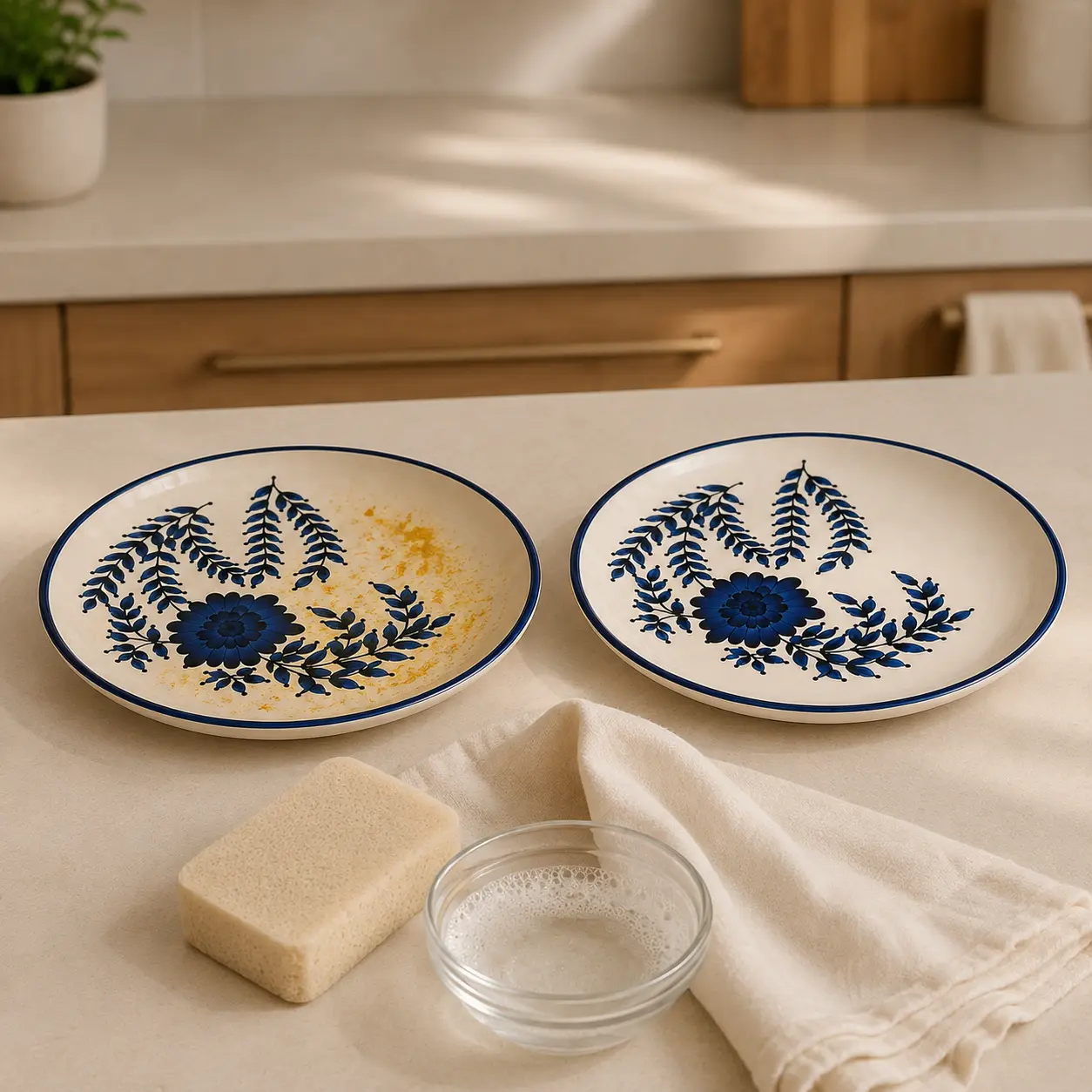
How to Remove Turmeric and Curry Stains from Ceramic Plates and Bowls
Turmeric gives Indian food its unmistakable golden colour, but it can also leave yellow marks on ceramic dinnerware. Dal tadka, paneer curry, sambhar, kadhi and other oil-based gravies can leave visible residue—particularly on light-coloured plates and bowls.
Fortunately, you do not always need an aggressive cleaner to remove turmeric stains from ceramic plates. Starting with a gentle cleaning method helps lift food residue while protecting the glaze, colour, pattern and decorative details.
This guide explains how to remove curry stains from ceramic dishes, care for different ceramic finishes and prevent haldi residue from becoming more difficult to clean.
How to Remove Turmeric Stains from Ceramic Plates: Quick Answer
Let the ceramic plate cool completely. Wash it with warm water, mild dishwashing liquid and a soft, non-scratch sponge. If the yellow mark remains, repeat the gentle wash and consult the care instructions for that exact product before trying any additional cleaner.
Avoid steel wool, metal scrubbers, sharp tools and harsh abrasive powders. Never place a hot ceramic plate directly in cold water because sudden temperature changes may damage the ceramic or its glaze.
This gentle process is the safest starting point when you need to remove turmeric stains from ceramic plates without unnecessarily affecting their finish.
Why Does Turmeric Stain Ceramic Dinnerware?
Turmeric contains a naturally intense yellow pigment called curcumin. When turmeric is combined with oil in curries and gravies, the coloured residue may remain on a plate or bowl after the food has been removed.
A mark can become more noticeable when:
Fresh turmeric stains on plates should first be treated as surface residue. Hard scrubbing or strong chemicals should not be the first response.
Check the Ceramic Finish Before Cleaning
Ceramic dinnerware can include stoneware, porcelain, reactive-glaze products, printed crockery and metallic-rim designs. The correct method for ceramic plate stain removal depends on the product’s material and finish.
Glossy Glazed Stoneware
A smooth glazed surface is generally easier to clean than an unglazed or heavily textured surface. Begin with warm water, mild dishwashing liquid and a soft sponge.
Do not use abrasive cleaning powder simply because the surface appears durable. Repeated abrasion can gradually dull the glaze.
Reactive-Glaze Dinnerware
Reactive glazes naturally contain colour variations, speckles and tonal differences. These variations are part of the design and should not be mistaken for food stains.
Before cleaning a suspected mark, compare it with the original product photographs. For example, the Reactive Blue Dinner Plates—Set of 6 have natural glaze variations that give every plate its distinctive appearance.
When cleaning reactive-glaze dinnerware:
Matte or Speckled Ceramic
Matte and speckled finishes require gentle handling because aggressive rubbing may leave an uneven-looking patch.
Use a soft sponge when attempting to remove haldi stains from bowls or plates with a matte or speckled surface.
Printed or Hand-Painted Dinnerware
Avoid repeated spot scrubbing over printed artwork. Even if the underlying ceramic remains intact, forceful cleaning may affect its decorative details.
Test any product-approved cleaning treatment on an inconspicuous area before applying it to a visible pattern.
Metallic-Rim Dinnerware
Golden, silver and other metallic details may require different care from plain glazed stoneware. Do not assume that bleach, abrasive cleaners or dishwasher cleaning are suitable.
Follow the instructions supplied with the exact product.
Five Steps to Remove Curry Stains from Ceramic Dishes
Use this gentle process before considering a stronger treatment.
1. Remove the Remaining Food
Use a soft spoon or silicone utensil to clear leftover curry, rice or vegetables. Do not scrape dried food with a knife or sharp metal tool.
Removing loose food first prevents particles from being dragged across the glaze during washing.
2. Let the Dinnerware Cool
If the plate or bowl was holding hot food, allow it to reach room temperature naturally.
Do not pour cold water over hot ceramic dinnerware. Sudden temperature changes can stress the ceramic and its glaze.
3. Wash with Warm Soapy Water
Add mild dishwashing liquid to warm water. Wash the stained area using a soft sponge or microfibre cloth.
Pay particular attention to the oily film around the yellow mark. Turmeric pigment can remain trapped in oily curry residue, so removing the grease gently is an important part of curry stain removal from crockery.
4. Repeat the Gentle Wash
If the stain remains, apply fresh soapy water and repeat the process using light circular movements.
Letting the dishwashing liquid work twice is safer than immediately using a hard scrubber.
5. Rinse, Dry and Inspect
Rinse the dinnerware thoroughly and dry it with a clean, soft cloth. Inspect the surface under natural light.
A wet plate can make a mark look different, so assess the result only after the product has dried completely.
What Should You Do If the Stain Remains?
A remaining yellow mark does not mean that several household chemicals should be applied at once.
Use the following order:
- Repeat the mild dishwashing-liquid method.
- Read the manufacturer’s care instructions.
- Identify whether the surface is glossy, matte, reactive, printed or metallic.
- Use an additional treatment only when it is permitted for that product.
- Test the approved treatment in a discreet area.
- Apply minimal pressure.
- Rinse thoroughly.
- Dry and inspect the surface.
- Stop if the colour, gloss or texture changes.
Baking soda, vinegar, bleach and hydrogen peroxide are frequently recommended online, but their suitability depends on the glaze, construction and decoration. None should be presented as universally safe for every ceramic product.
Never mix cleaning chemicals. Certain combinations can create hazardous reactions and may also damage the dinnerware.
Can Baking Soda Remove Turmeric Stains?
Baking soda is mildly abrasive. It may be permitted for certain glazed ceramic products, but that does not make it safe for every printed, matte, metallic-rim or reactive-glaze product.
Before using baking soda:
The same caution applies when using baking soda to remove curry stains from ceramic dishes.
Can Vinegar Be Used on Ceramic Plates?
Vinegar should not be treated as a universal ceramic cleaner. Its suitability depends on the type of glaze, decoration and manufacturer’s directions.
Do not combine vinegar with bleach or other cleaning products. If vinegar is not mentioned in the product-care instructions, start with mild dishwashing liquid instead.
Can Bleach Be Used on White Ceramic Bowls?
A white colour does not automatically make ceramic dinnerware suitable for bleach.
Avoid using bleach unless the manufacturer explicitly permits it and provides instructions for concentration, contact time and rinsing. Printed artwork, metallic rims and certain glazes may require more conservative care.
How to Clean Light-Coloured Ceramic Dinnerware
Light-coloured dinnerware makes yellow curry residue easier to notice. The stain may not be more severe—it simply creates stronger contrast against the surface.
The Beige Dinner Plates with Black Rims—Set of 6 are an example of neutral stoneware suited to everyday Indian meals. After serving curry, rice or vegetables, clear the plates promptly and clean them according to their product-care instructions.
To protect light-coloured ceramic:
How to Clean Ceramic Serving Bowls After Curry
Serving bowls often hold curry or dal for longer than individual dinner plates. They may therefore develop a more visible oily film around the food line.
For easier cleaning:
- Transfer leftovers into an appropriate storage container.
- Allow the serving bowl to cool.
- Remove oily residue with mild dishwashing liquid.
- Clean both the inside and outside of the bowl.
- Pay attention to the rim.
- Rinse and dry completely.
Using a suitably sized serving bowl can also reduce spills and overflow. The Beige Serving Bowls with Black Rims—Set of 2 provide 750 ml capacity per bowl for serving curry, rice, pasta, salad and other shared dishes.
This product mention fits naturally here because deeper serving bowls are often the dinnerware most exposed to oily curries.
How to Clean a Complete Ceramic Dinner Set
When cleaning a coordinated dinner set, separate the components by size instead of piling every plate and bowl into the sink.
A practical sequence is:
- Remove food from the serving bowls.
- Clear the dinner plates.
- Empty the small bowls or katoris.
- Wash the least oily pieces first.
- Wash curry-serving pieces separately.
- Rinse every item thoroughly.
- Dry each component before stacking.
The Reactive Blue 14-Piece Dinner Set includes six dinner plates, six small bowls and two serving bowls. Cleaning the components in groups makes it easier to protect their coordinated reactive finish.
What Not to Use on Ceramic Plates and Bowls
Avoid the following when you clean ceramic dinnerware:
These methods can scratch the glaze, dull the finish or affect decorative details.
How to Prevent Haldi and Curry Stains
Preventing dried residue is easier than trying to remove an older stain.
Clear Dinnerware Promptly
Remove leftover curry after the meal instead of leaving it on the plate for several hours.
Avoid Leaving Curry Overnight
Transfer leftovers into a suitable food-storage container rather than leaving oily curry on a plate or in a serving bowl overnight.
Let Hot Dinnerware Cool Naturally
Allow ceramic dinnerware to cool before washing it. Avoid rapid temperature changes.
Choose an Appropriately Sized Bowl
Use sufficiently deep serving bowls for curry and dal. Comfortable headroom reduces spills around the rim and exterior.
Keep a Separate Soft Sponge
A sponge used for heavy cookware may retain rough particles. Keep a clean, soft sponge for ceramic dinnerware.
Dry Before Stacking
Make sure plates and bowls are completely dry. Use suitable separators where required to help prevent scratching.
These habits help prevent turmeric stains on plates and make everyday ceramic cleaning easier.
Is It a Stain, Utensil Mark or Glaze Damage?
Not every mark has the same cause.
| Appearance | Possible explanation | Recommended response |
|---|---|---|
| Yellow surface film | Turmeric, oil or curry residue | Begin with gentle washing |
| Grey line | Possible metal-utensil transfer | Check the care instructions |
| Fine network of lines | Possible glaze crazing | Stop aggressive cleaning and inspect |
| Missing glaze or visible chip | Physical damage | Stop using until its condition is assessed |
| Uneven colour present from purchase | Reactive-glaze variation | Compare with original product images |
| Dull patch after scrubbing | Possible finish damage | Stop and review the cleaning method |
If a plate has cracks, chips or missing glaze, further scrubbing will not repair the damage.
Common Ceramic-Cleaning Mistakes
Scrubbing Harder Before Identifying the Finish
Increasing pressure may create a dull area that becomes more visible than the original stain.
Assuming Every Ceramic Product Is Identical
Stoneware, porcelain, printed ceramic and metallic-rim dinnerware can have different care requirements.
Treating Reactive-Glaze Variation as Dirt
Compare the product with its original photograph before applying a stain treatment.
Washing Hot Ceramic with Cold Water
Allow hot plates and bowls to cool naturally before washing.
Mixing Cleaning Chemicals
Never mix bleach, vinegar, ammonia or other cleaning agents. Some combinations can produce dangerous fumes.
Leaving Dinnerware Damp
Rinse and dry every component before stacking or storing it.
Assuming Dishwasher-Safe Means Every Cleaner Is Safe
Dishwasher suitability does not mean that every abrasive powder, bleach solution or stain remover can be used.
Ceramic Dinnerware Care Checklist
Before cleaning:
During cleaning:
After cleaning:
Following this sequence can help remove food stains from dinnerware while preserving its glaze and appearance.
Frequently Asked Questions
How do you remove turmeric stains from ceramic plates?
Allow the plate to cool, then wash it with warm water, mild dishwashing liquid and a soft sponge. Repeat the gentle wash before considering any product-approved stain treatment.
How do you remove curry stains from ceramic bowls?
Clear the leftover curry, wash the bowl with warm soapy water and gently remove the oily film using a non-scratch sponge. Rinse and dry it before checking the result.
Can turmeric permanently stain glazed ceramic?
The result depends on the glaze, duration of contact and condition of the surface. Begin with gentle cleaning and follow the manufacturer’s instructions.
Can baking soda be used on ceramic dinnerware?
Only use it when the care instructions permit it. Baking soda is mildly abrasive and may dull certain finishes when rubbed forcefully.
Is vinegar safe for glazed ceramic plates?
Not universally. Its suitability depends on the glaze and decoration. Follow the directions provided for the exact product.
Can bleach be used on white ceramic bowls?
Do not use bleach unless the manufacturer explicitly permits it. White ceramic may still have a glaze, print or decorative detail that requires gentler care.
Why does a turmeric stain return after washing?
An oily film may remain on the surface and make the yellow pigment visible again after drying. Repeat the mild dishwashing-liquid method.
Can metal scrubbers damage ceramic dinnerware?
Yes. Metal scrubbers may mark or scratch glazed surfaces. Use a soft cloth or non-scratch sponge.
Should stained ceramic dinnerware be soaked overnight?
Avoid prolonged soaking unless the product-care instructions specifically permit it.
How can curry stains on plates be prevented?
Clear food promptly, avoid leaving oily curry overnight, let hot dinnerware cool and wash it with mild dishwashing liquid.
How can you identify reactive-glaze variation?
Compare the mark with the original product image. Reactive-glaze variations are incorporated into the finish and may differ slightly between pieces.
Can metallic-rim dinnerware be cleaned normally?
Metallic details may require special handling. Avoid aggressive scrubbing and follow the care instructions provided for that product.
Final Thoughts
To remove turmeric stains from ceramic plates, start with the gentlest method: allow the plate to cool, wash it using warm water and mild dishwashing liquid, and use a soft sponge.
The same method is the safest starting point when you need to remove curry stains from ceramic dishes, clean stoneware plates or remove haldi stains from bowls. Protecting the glaze, pattern and rim is just as important as removing the visible mark.
Prompt cleaning and careful handling can keep ceramic dinnerware ready for daily Indian meals, family gatherings and festive occasions.
Explore nestcase Dinner Sets and Bowls & Platters for coordinated ceramic tableware for everyday and special dining.