
How to Create a Slow Weekend Breakfast Ritual at Home
Weekday breakfasts are often shaped by the clock. We eat between messages, commutes, household tasks and the first meeting of the day. A weekend breakfast can offer something different: a short stretch of time in which food is prepared with attention, the table is set before anyone sits down and the morning begins without immediately rushing into the next task.
Creating that experience does not require a redesigned kitchen, an elaborate brunch menu or a collection of decorative accessories. The most useful weekend breakfast ideas at home begin with a repeatable sequence: prepare, set, serve, pause and reset. Each step removes a little friction and gives an ordinary meal a clearer sense of occasion.
The goal is not to manufacture a picture-perfect morning. It is to make breakfast feel easier to enjoy and easier to repeat, using food and tableware that already suit the way your household lives.
What Is a Slow Weekend Breakfast Ritual?
A slow weekend breakfast ritual is a simple routine that creates more space around the first meal of the day. “Slow” does not necessarily mean spending two hours cooking. It means choosing fewer things, preparing them in a calm order and allowing enough time to sit down before clearing the table.
For one household, that may mean coffee and sourdough toast beside a sunny window. For another, it may be tea, an omelette and fruit shared at the dining table. The ritual should reflect the food you genuinely enjoy, the number of people eating and the time you realistically have.
A useful framework is:
Prepare one drink and one main dish.
Set out only the tableware the meal requires.
Serve the food while its texture and temperature are at their best.
Pause long enough to eat without multitasking.
Reset the table and kitchen while the routine is still manageable.
Why the Table Matters
The table is not valuable because it looks styled. It is valuable because it creates a boundary around the meal. Placing a cup, plate and bowl before serving food signals that breakfast is something to sit down for, even when the meal itself is simple.
Thoughtful tableware also makes the meal easier to navigate. A plate gives toast or an omelette enough room. A compact bowl keeps yoghurt, fruit or chutney separate. A larger serving bowl allows fruit, bread or a shared preparation to remain at the centre without individual plates becoming crowded. Good placement supports the food instead of competing with it.
Step 1 Choose One Drink and One Main Dish
A long menu can turn a relaxed morning into another production schedule. Begin with one beverage and one primary preparation. Add fruit, yoghurt or a small accompaniment only when it completes the meal rather than simply filling the table.
Coffee may suit toast, pancakes or a breakfast bowl. Tea may work better with an omelette, kebabs or a baked snack. Juice or infused water can accompany either, but there is no need to prepare several drinks for the sake of variety. A shorter menu is usually easier to serve at the right temperature and easier to clean afterwards.
Step 2 Set the Table Before Cooking
A simple breakfast table setting takes only a few minutes when it is done before food preparation begins. Put out the exact number of plates, cups and bowls required. Place water glasses within easy reach and keep the centre open for one shared serving dish.
This order prevents hot food from waiting while cupboards are opened and pieces are searched for. It also makes missing items obvious before cooking starts.
A Simple Breakfast Table for Two
Two dinner or quarter plates
Two cups or mugs
Two small bowls when yoghurt or accompaniments are served
Two water glasses
One shared serving bowl or platter, only if needed
Two sets of cutlery
One small napkin or textile accent
Step 3 Match the Tableware to the Food
Choosing tableware by function helps the breakfast feel composed without adding decoration. A generously sized mug gives milk coffee or tea enough room. A compact cup works for a smaller serving. Quarter plates suit toast, pancakes and baked snacks, while dinner plates give an omelette, salad or composed breakfast more breathing room.
Use individual bowls for yoghurt, fruit, chutney or a small serving of granola. Use a larger serving bowl for food shared at the table. Bowl capacity should guide the choice, but it should not be treated as a prescribed dietary portion. Leave practical headroom for liquids, yoghurt and foods that need mixing.
Five Elevated Weekend Breakfast Combinations
These combinations are designed for a contemporary home breakfast rather than a restaurant-style spread. Each uses familiar ingredients in a more considered format and can be adjusted to suit household preferences.
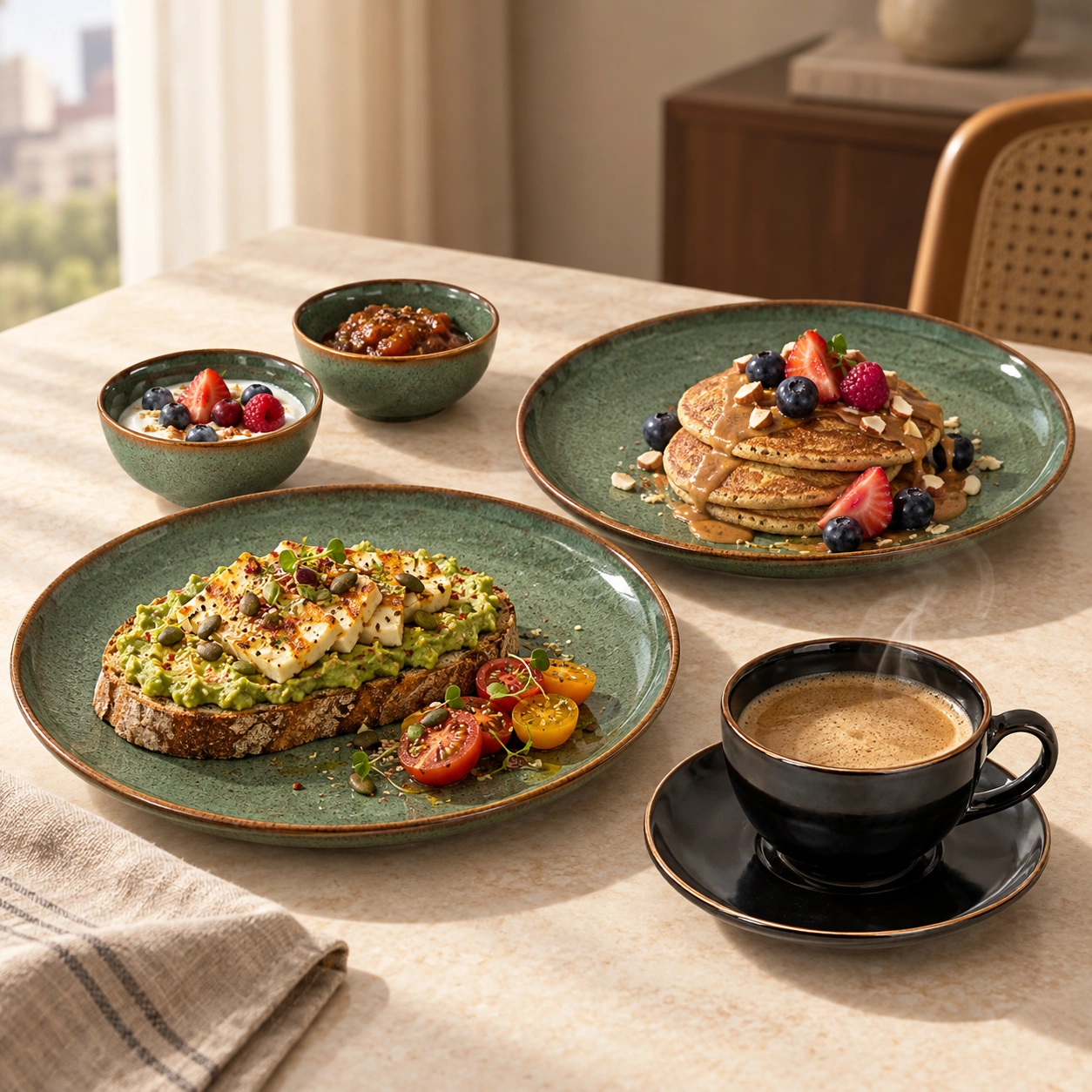
1 Avocado and Paneer Sourdough Toast
Toast slices of sourdough until the edges are crisp. Top them with lightly seasoned avocado, warm paneer cubes, chilli flakes, lime and a restrained herb garnish. Serve on a dinner or quarter plate so the toast does not overlap.
Tableware pairing: Pair with coffee in a 280 ml ceramic mug and a small bowl of fruit.
2 Greek Yoghurt Granola and Berry Bowl
Spoon thick Greek yoghurt into an individual bowl and add granola only before serving so it retains its texture. Finish with seasonal berries or sliced fruit, nuts and a small amount of honey if desired.
Tableware pairing: Pair with tea or coffee and serve extra fruit in a shared 750 ml bowl.
3 Spinach Corn and Cheese Omelette
Cook a soft omelette with sauteed spinach, sweet corn, herbs and a restrained amount of cheese. Add sourdough, roasted tomatoes or a lightly dressed salad rather than several side dishes.
Tableware pairing: Use a full dinner plate and keep sauces in a separate small bowl.
4 Millet Pancakes with Fruit and Nut Butter
Prepare small millet-based pancakes and stack only three or four per plate. Add sliced fruit and serve nut butter separately so each person can control the amount and texture.
Tableware pairing: Use a quarter plate for a lighter serving or a dinner plate when fruit and yoghurt are included.
5 Mushroom and Paneer Breakfast Bowl
Saute mushrooms and paneer with black pepper, herbs and a small amount of garlic. Serve them over quinoa, millet or roasted potatoes with greens and a spoonful of yoghurt-based dressing.
Tableware pairing: Choose a larger bowl with enough room to combine the ingredients without filling it to the rim.
Step 4 Create a Table That Feels Calm, Not Decorated
A considered breakfast table does not need a centrepiece. The food, ceramics and glassware already provide colour and form. Begin with a warm neutral surface, then introduce one controlled accent through a napkin or short runner. Forest green, sage, clay and muted blue can add depth without dominating the table.
Natural side light is usually enough for both the meal and any photographs. Keep distinctive rims and glazes visible, avoid placing food over every decorative detail and do not digitally alter product colours. If the table is small, move flowers, books and other non-essential objects to a nearby console.
Step 5 Pause Without Turning the Morning Into a Rule
The ritual should create ease, not another list of standards to meet. A pause may mean finishing one cup of coffee before checking notifications, talking through plans for the day or reading a few pages while eating. It does not need to involve meditation, journalling or a prescribed wellness routine.
Keep phones away from the immediate place setting when practical, but avoid treating the breakfast as a performance. The most sustainable ritual is one that still works when the morning is imperfect.
Breakfast for One Can Still Feel Considered
A solo breakfast does not need to be eaten directly from cookware or standing at the counter. Use one plate or bowl that properly suits the food, one cup and one glass of water. Serve the meal once rather than carrying several ingredients back and forth. The smaller setup can feel especially calm because there is less to arrange and reset.
How to Adapt the Ritual for a Family
For a family breakfast, keep individual settings consistent and move shared food to the centre. One serving bowl for fruit and one platter for toast or pancakes may be enough. Avoid placing every available bowl on the table before the menu is finalised.
Children and adults may prefer different drinks or accompaniments, but the base meal can remain common. Put optional toppings in compact bowls and allow each person to assemble the final plate. This creates flexibility without turning breakfast into several separate menus.
The Ten Minute Breakfast Reset
A slow breakfast becomes easier to repeat when the reset is part of the ritual rather than postponed until later.
1. Transfer leftovers into suitable storage containers.
2. Clear food residue before it dries on plates and bowls.
3. Wash or load tableware according to its specific care instructions.
4. Use a soft, non-scratch sponge where handwashing is required.
5. Dry the table and return non-essential objects to their places.
6. Store cups, plates and bowls only when they are completely dry.
7. Leave the breakfast area ready for its next everyday use.
Common Weekend Breakfast Mistakes
Planning too many dishes for the time available
Buying special accessories before establishing the routine
Using every matching piece simply because it belongs to the set
Crowding a small table with decoration
Serving hot food before cups and plates are ready
Choosing bowls that leave no room for mixing
Filling large glasses or mugs to the rim
Leaving strongly coloured or oily food on ceramicware for several hours
Applying heavy filters that alter the genuine product colour
Treating a relaxed breakfast as a compulsory wellness routine
A Practical Weekend Breakfast Checklist
Decide the drink and main dish the night before.
Check that the required tableware is clean and dry.
Set the table before beginning the final cooking stage.
Use one shared serving piece whenever possible.
Leave the centre of the table functional.
Serve garnishes and sauces with restraint.
Allow time to sit down before the next commitment.
Complete the reset while it is still small.
Final Thoughts
The best weekend breakfast ideas at home are not necessarily the most elaborate. A thoughtful breakfast table setting, one enjoyable dish and enough time to sit down can change the character of the morning without requiring a new room or a large collection of accessories.
Begin with the tableware and food already part of your routine. Prepare, set, serve, pause and reset. When the sequence feels natural, an ordinary breakfast can become one of the most considered moments of the week.
Frequently Asked Questions
How can I make breakfast at home feel special?
Choose one main dish and one drink, set the table before cooking and use tableware suited to the food. A restrained setup usually feels more intentional than an overcrowded spread.
What should I serve for a slow weekend breakfast?
Consider avocado and paneer toast, a Greek-yoghurt granola bowl, a spinach and corn omelette, millet pancakes or a mushroom and paneer breakfast bowl.
How do I set a breakfast table for two?
Use two plates, two cups, two water glasses and only the small bowls or shared serving pieces required by the menu.
Do I need special brunch tableware?
No. Everyday plates, bowls, mugs and glasses can create a considered breakfast when their sizes and functions suit the meal.
Which plate is best for breakfast?
Quarter plates suit toast, pancakes and smaller preparations. Dinner plates offer more room for omelettes, salads and composed breakfasts.
Which bowl should I use for a breakfast bowl?
Choose a bowl with enough depth and usable capacity for the ingredients to be mixed without filling it to the rim.
What mug size works for a weekend coffee?
The right size depends on the beverage. A 280 ml mug can suit milk coffee, cappuccino, tea or hot chocolate, while a smaller cup may be preferable for a shorter serving.
How can I style a small breakfast table?
Keep the centre open, use one shared serving dish and introduce colour through the food or one textile accent rather than several decorative objects.
Can I create a breakfast ritual when eating alone?
Yes. Use one appropriate plate or bowl, one cup and a glass of water, then sit down rather than eating directly from cookware or at the counter.
How can I make a family breakfast easier?
Choose a shared base meal, place optional toppings in compact bowls and avoid preparing separate full menus unless required.
Should phones be banned at breakfast?
Not necessarily. Keeping them away from the immediate setting may reduce distraction, but the ritual should remain practical rather than rigid.
How long should a slow breakfast take?
There is no fixed duration. Even twenty or thirty unhurried minutes can feel different from eating while completing other tasks.
How do I clean ceramic breakfast tableware?
Follow the exact product instructions. Begin with mild dishwashing liquid, suitable water temperature and a soft, non-scratch sponge when handwashing is recommended.
How do I prevent a weekend ritual from becoming complicated?
Repeat the same basic sequence, limit the menu and keep only frequently used tableware accessible.
Can the same setup be used for guests?
Yes. Increase the number of individual settings and add only the shared serving pieces required by the final menu.