
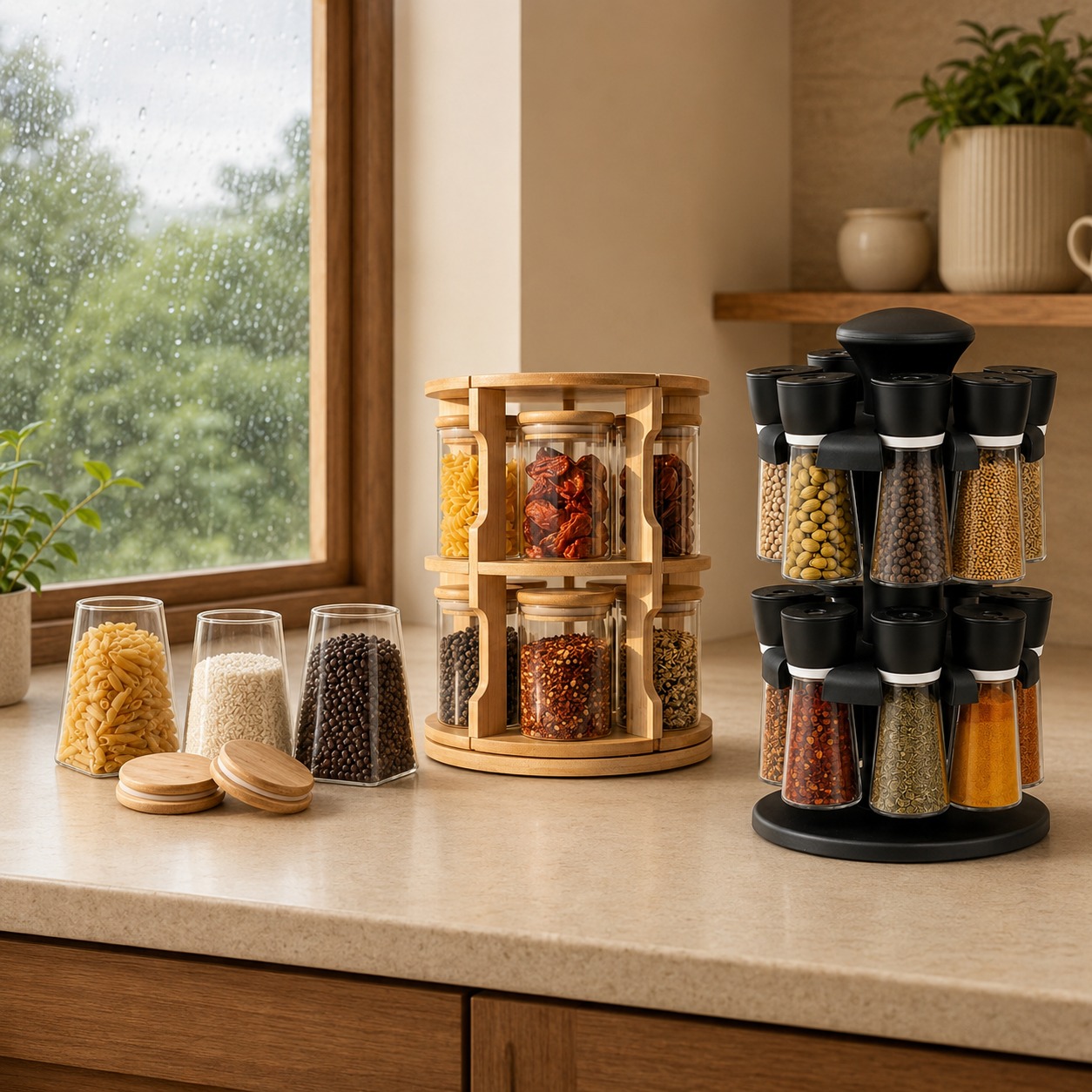
How to Prevent Dampness in Kitchen Containers During Monsoon
Monsoon humidity can make sugar sticky, spices lumpy, biscuits soft and stored grains smell stale. The main cause is moisture entering containers through wet spoons, incompletely dried jars, loose lids or repeated exposure to humid kitchen air.
The best approach to kitchen storage in monsoon is simple: use clean and completely dry containers, close them immediately after use, keep them away from steam and check stored food regularly.
This common seasonal problem is particularly relevant to Indian homes, where frequently used ingredients such as atta, rice, dals, tea, sugar and masalas may be opened several times every day. The following practical home and kitchen ideas can help keep dry ingredients fresher and your pantry easier to manage.
Quick answer: How do you prevent dampness?
To prevent dampness inside kitchen containers:
- Wash and dry containers completely before filling them.
- Never add fresh food over damp or stale ingredients.
- Use a clean, dry spoon every time.
- Choose containers with properly fitting lids.
- Keep containers away from the sink, stove and direct steam.
- Store only room-temperature ingredients.
- Open containers only when required and close them immediately.
- Inspect food regularly for clumping, insects, unusual smells or mould.
FSSAI guidance recommends controlling storage humidity so it does not increase product moisture enough to encourage mould growth, particularly for spices. Containers should also remain properly covered. Read the FSSAI guidance on spice storage.
Why does dampness develop inside containers?
Humidity is not the only cause. Dampness can develop through several everyday habits.
The container was not completely dry
A jar may look dry while small drops remain around the rim, lid, seal or corners. Once food is added and the container is closed, this moisture becomes trapped.
Allow washed containers and lids to air-dry separately. Inspect the rim and seal before refilling them.
A wet spoon was used
Even a few drops of water can affect salt, sugar, powdered spices, tea, coffee and other dry ingredients. Keep a dedicated dry spoon inside frequently used containers only if the container is large enough and the spoon itself remains clean and dry.
Warm ingredients were stored too early
Freshly roasted spices, warm snacks or hot ingredients can release vapour inside a closed container. As the vapour cools, it may form condensation.
Always allow cooked, roasted or heated items to reach room temperature before storage.
Containers are positioned near steam
Containers placed beside a gas stove, electric kettle, sink or dishwasher face repeated exposure to heat and moisture. This seasonal problem becomes more noticeable during periods of high humidity.
In compact Indian homes, shifting the most sensitive ingredients even a short distance away from these areas can make daily storage easier to manage.
Seven practical ways to keep containers dry
1. Start with a completely clean container
Empty the container before adding a new batch. Remove old crumbs or powder from the base and corners, then wash it according to the material’s care instructions.
Do not mix a fresh packet with old stock without first checking the remaining food for odour, insects, clumping or discolouration.
2. Dry the lid and seal separately
The lid is often the most neglected part of the container. Water can remain beneath a gasket, around a thread or inside a wooden or plastic lid.
Remove detachable seals only when permitted by the product instructions. Wash them, let every component dry completely and reassemble the container only afterward.
3. Use the right container size
A container should match the quantity being stored. Frequently opening a very large container exposes the entire quantity to humid air.
For ingredients used every day, keep a manageable quantity in a smaller jar and retain the remaining sealed stock in a cool, dry cupboard.
4. Create a dry-spoon rule
Label or dedicate separate spoons for salt, sugar, tea, coffee and masalas. Never transfer a spoon directly from a steaming pan into a storage container.
This small habit helps prevent moisture, food residue and cross-contamination from entering stored ingredients.
5. Improve pantry positioning
Store sensitive dry foods:
A kitchen rack can keep frequently used containers visible and reduce the chance of forgotten jars remaining at the back of a damp cabinet.
6. Close the container immediately
Do not leave lids open while cooking. Steam from boiling rice, dal, tea or vegetables can settle on nearby surfaces and enter uncovered jars.
Take out the required quantity and close the lid before continuing with food preparation.
7. Inspect stored food every week
During monsoon, check frequently used ingredients once a week. Look for:
If food shows mould, a persistent musty smell or clear spoilage, discard it. Do not try to save it by removing only the visibly affected portion.
Common monsoon-storage mistakes
Using newspaper inside containers
Newspaper is not intended to come into direct contact with food and does not replace a properly fitting lid.
Adding rice to every ingredient
Rice is sometimes used as a home remedy for absorbing moisture, but it can introduce dust, insects or another food ingredient into the container. Correct drying, suitable lids and better storage placement are more dependable practices.
Assuming every decorative jar is airtight
A lid that rests on top of a jar is not automatically airtight. Check the product specification and sealing mechanism before making this assumption.
Refilling without washing the container
Residue from the previous batch may hold moisture or become stale. Empty, inspect, clean and fully dry the container before a major refill.
Keeping containers against a damp wall
Condensation or seepage can affect the outside of the container and the surrounding shelf. Clean the area and leave a small ventilation gap where possible.
Choosing suitable kitchen-storage products
Good kitchen storage in monsoon depends on both the container and the habits surrounding it. Look for:
For frequently used tea, coffee, sugar, dals or dry snacks, explore nestcase airtight kitchen containers.
For keeping spices visible and reducing counter clutter, consider a nestcase rotating spice rack.
These product placements should be added only after confirming stock, specifications and the correct destination pages. Useful products should solve the reader’s problem naturally rather than interrupt the article—one of the most effective home and kitchen ideas for balancing helpful content with ecommerce.
Frequently asked questions
Which ingredients are most affected by monsoon moisture?
Salt, sugar, powdered spices, tea, coffee, flour, cereals, biscuits and roasted snacks commonly absorb moisture or lose texture when repeatedly exposed to humid air.
Should containers be kept in the refrigerator?
Not automatically. Refrigeration can expose some dry foods to condensation when containers are repeatedly taken out and opened. Follow the storage instructions printed on the original food packaging.
Can glass containers prevent dampness?
Glass itself is non-porous, but moisture control depends on the lid, seal and handling. A glass jar with a loose lid can still allow humid air to reach its contents.
How often should kitchen containers be cleaned?
Clean a container before changing ingredients, when residue becomes visible, or before adding a substantially new batch. Every container and lid must be completely dry before refilling.
What should I do if moisture appears inside a container?
Remove the food and inspect it for spoilage. Wash and dry the container thoroughly. Discard the food if it has mould, an unusual smell, insect activity or other signs of deterioration.
Final monsoon pantry checklist
Before storing dry ingredients, confirm that:
Consistent habits matter more than complicated remedies. Clean containers, dry spoons, properly fitting lids and sensible pantry placement can significantly reduce moisture-related storage problems throughout the rainy season.