
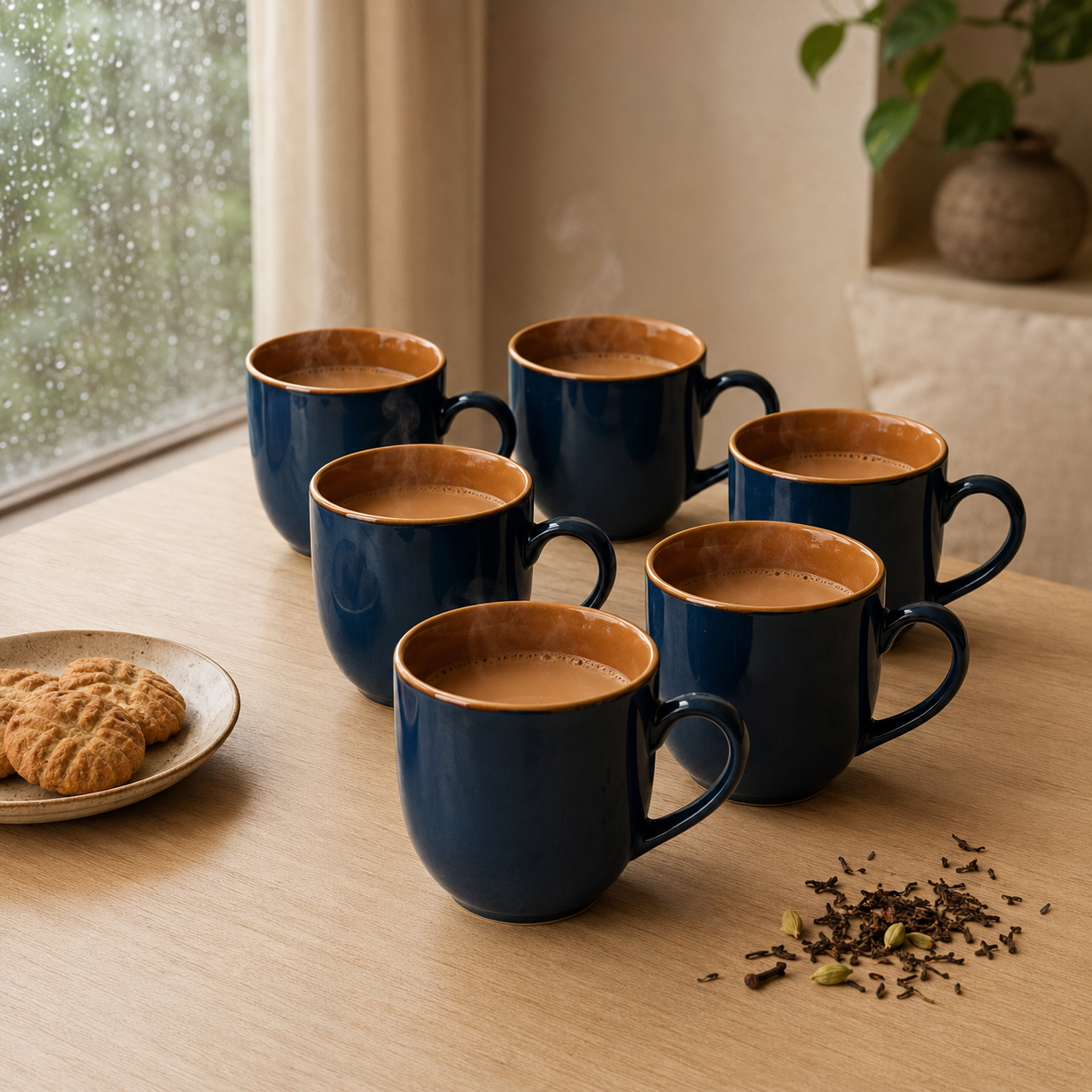
Best Ceramic Cups and Kulhads for Chai Lovers
Chai is more than a beverage. It can begin a busy morning, provide a quiet afternoon break or bring family and friends together in the evening. The vessel used to serve it affects portion size, grip, presentation and the overall drinking experience.
When comparing the best cups for chai, consider capacity, shape, handle design, material, set quantity and care requirements. A coordinated ceramic tea cups set may suit family serving, while reusable ceramic kulhads can create a more traditional and intimate chai experience.
This commercial guide explains how to select suitable cups and kulhads for different routines in Indian homes, without choosing only by colour or appearance.
Quick answer: Which cup is best for chai?
The best option depends on how you normally prepare and serve chai:
There is no single cup that suits every household. Start by measuring the amount of chai you normally drink and compare that quantity with the product’s stated usable capacity.
Ceramic cups or ceramic kulhads: what is the difference?
Both products may be made from ceramic or stoneware, but their forms create different experiences.
| Feature | Ceramic cups | Ceramic kulhads |
|---|---|---|
| Grip | Usually include a handle | Normally handleless |
| Serving style | Contemporary and versatile | Traditional or artisanal |
| Suitable for | Tea, coffee, cappuccino and hot chocolate | Chai, filter coffee and smaller servings |
| Common capacity | Available in small and large sizes | Usually compact |
| Best use | Daily routines, desks and family serving | Personal chai rituals, hosting and gifting |
Traditional kulhads are normally unglazed clay vessels. Reusable ceramic kulhad-style cups are different: they are fired and commonly glazed for repeated household use. Always verify the material and care instructions of the exact product.
How to choose the right capacity
Capacity is one of the most important details when buying chai cups online. Photographs can make a cup appear larger or smaller, so the millilitre measurement should guide your decision.
100–120 ml: concentrated servings
This compact size is useful for cutting chai, espresso, filter coffee and herbal infusions. It also works well for people who prefer smaller servings or like to refill their cup.
A smaller capacity keeps the serving light and allows the beverage to be consumed while it is still warm.
150 ml: everyday masala chai
A 150 ml cup provides a balanced portion for milk tea and masala chai. It is large enough for a satisfying serving but remains compact enough for family tea and refills.
This capacity is practical when serving several guests because the portions remain manageable and reduce the possibility of unnecessary wastage.
220 ml: relaxed tea and coffee
A 220 ml cup is better suited to longer tea breaks, green tea, coffee and hot chocolate. It provides extra room without requiring an oversized mug.
Before ordering, check whether the advertised capacity is the normal usable capacity or the maximum volume when filled to the rim. A cup should not normally be filled completely because some space is needed to lift and carry it safely.
Which cup suits different types of chai?
Different chai preparations can feel more comfortable in different cup sizes.
These are serving suggestions rather than strict rules. Your preferred portion and drinking routine should determine the final choice.
Handle or handleless: which should you choose?
A handled cup keeps the hand away from the warm body. It can be more convenient for work desks, daily family tea and people who prefer a conventional grip.
A handleless kulhad creates a distinctive chai presentation and encourages smaller, slower servings. However, its exterior may become warm depending on the wall thickness and beverage temperature.
When comparing kulhad cups online, examine photographs showing the complete side profile, rim, base and interior. A product should look stable, appropriately sized and comfortable to lift.
Recommended nestcase cups and kulhads
1. Floral-blue cups for family chai
The Off-White and Floral Blue Ceramic Mug Set of 6 offers a 150 ml capacity per cup.
This chai cups set of 6 is suitable for everyday family tea, weekend conversations and small gatherings. Its floral-blue design adds visual character, while the handles make the cups practical for regular serving.
2. Green tree-design cups for coordinated serving
The Off-White and Green Tree-Design Ceramic Mug Set of 6 also has a 150 ml capacity per cup.
The white-and-green design works well with wooden, beige and neutral dining surfaces. The complete set can be used for everyday chai as well as serving visitors.
3. Reactive-blue kulhads for smaller portions
The Reactive Blue Ceramic Kulhad Set of 2 provides a normal capacity of 100 ml and a maximum capacity of approximately 120 ml per cup.
The compact handleless form is suitable for chai, filter coffee and espresso. Reactive glaze may produce natural variations in colour and pattern, giving each piece a slightly individual appearance.
4. Black ceramic cups for longer servings
The Black with Golden Rim Ceramic Cup Set of 2 offers a 220 ml capacity per cup.
The larger size is suitable for relaxed tea and coffee servings. Products with metallic-looking decoration should always be used according to their exact care and microwave instructions.
How to choose your chai cups step by step
Follow this process before purchasing:
- Measure the quantity of chai you normally drink.
- Decide whether you prefer a handle or a handleless form.
- Select a pair for personal use or six cups for family serving.
- Check normal capacity, maximum capacity and physical dimensions.
- Confirm the product’s material and finish.
- Verify washing, dishwasher and microwave instructions.
- Review images showing the full set, rim, base and handle.
- Consider the cupboard space required for safe storage.
These practical home and kitchen ideas can prevent purchasing cups that look attractive online but feel too small, too large or uncomfortable during daily use.
When choosing a ceramic tea cups set, also compare the shape and height of the handles. A handle that looks elegant may still be inconvenient if it is too small for a secure grip.
For reusable ceramic kulhads, check whether the exterior is glazed, whether the base is stable and whether the stated capacity suits your preferred chai portion.
How many chai cups should you buy?
The correct quantity depends on household size and how frequently guests visit.
Avoid buying a large quantity only because it is discounted. Consider how often the cups will be used and where they will be stored.
Are ceramic cups and kulhads suitable for gifting?
Ceramic drinkware can make a practical housewarming, wedding, anniversary or festive gift because it can be used regularly.
Before selecting a gift, consider:
Do not assume that decorative packaging is included unless it is shown and mentioned on the product page. A useful product with clear specifications can be more valuable than elaborate packaging.
Styling a simple chai setting
An attractive chai table does not require excessive decoration. Start with a clean wooden, beige or light-stone surface and include only what is required for serving.
A practical arrangement may contain:
These serving arrangements work well in Indian homes, where tea may be offered during daily family time and when unexpected guests arrive.
Keep food, cups and conversation at the centre of the setup. Too many flowers, candles and decorative objects can make the table feel crowded and reduce the available serving space.
Common mistakes when buying chai cups
Buying only for appearance
Colour and pattern matter, but they should not replace practical considerations such as capacity, grip, stability and set quantity.
Ignoring usable capacity
A cup may be advertised at its maximum rim capacity. Its comfortable serving capacity may be lower, especially when space is needed to carry the beverage safely.
Confusing ceramic kulhads with disposable clay cups
Reusable glazed ceramic kulhads and traditional unglazed clay kulhads can require different cleaning and storage methods. Do not assume that every kulhad should be reused or washed in the same way.
Failing to verify the complete set
When shopping for kulhad cups online, confirm the exact number of pieces, capacity per cup and whether accessories shown in photographs are genuinely included.
Assuming all ceramic products have identical care requirements
Different glazes, rims and decorative finishes may require different handling. Follow the instructions provided for the specific product.
Ignoring storage requirements
Wide handles and irregular shapes may require more cupboard space than expected. Check product dimensions and plan enough room to prevent pieces from colliding.
How to clean ceramic cups and kulhads
Use this basic routine:
- Allow the cup to cool before washing.
- Use mild dishwashing liquid and a soft sponge.
- Avoid harsh scrubbers that may mark the finish.
- Rinse away all soap residue.
- Dry each cup completely before storage.
- Store cups upright in a dry cabinet.
- Leave enough space around handles and rims.
- Follow the product’s dishwasher and microwave instructions.
For tea stains, begin with warm water, mild dishwashing liquid and a soft sponge. Do not use aggressive powders or chemicals unless the care instructions permit them.
Good cleaning and storage practices are useful home and kitchen ideas for extending the practical life of frequently used tableware.
Final buying checklist
Before choosing the best cups for chai, verify:
The purpose of this commercial guide is not to declare one universal winner. The right cup is the one that fits your chai portion, grip preference, household size and cleaning routine.
Explore nestcase cups and mugs to compare ceramic cups, mugs and kulhad-style drinkware for tea, coffee and everyday serving.
Frequently asked questions
What capacity is suitable for everyday chai?
Approximately 150 ml is suitable for a regular masala chai serving. Choose 100–120 ml for smaller servings and approximately 220 ml for longer tea or coffee.
Are ceramic kulhads reusable?
Glazed ceramic kulhad-style cups are generally designed for repeated use. Traditional unglazed clay kulhads may have different intended uses, so check the exact product information.
Which cups are suitable for serving guests?
A coordinated set of six handled cups is convenient for family gatherings. A pair of kulhads is more suitable for personal use or serving one additional person.
How should ceramic chai cups be stored?
Wash and dry them completely before placing them upright in a dry cabinet. Avoid overcrowding or stacking them in a way that puts pressure on handles, rims or decorative finishes.